Phone:
(86)138-1388-1779
Physical address:
6296 Donnelly Plaza
Ratkeville, Bahamas.

Phone:
(86)138-1388-1779
Physical address:
6296 Donnelly Plaza
Ratkeville, Bahamas.
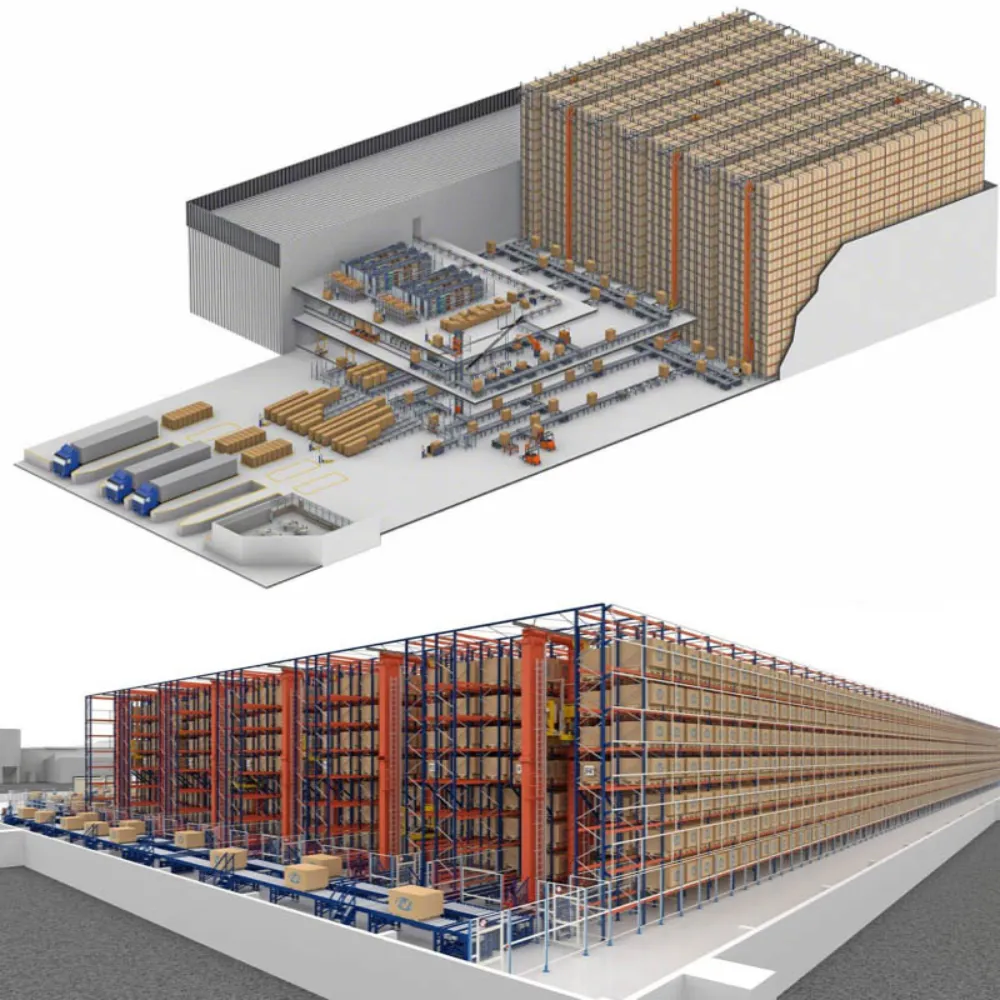
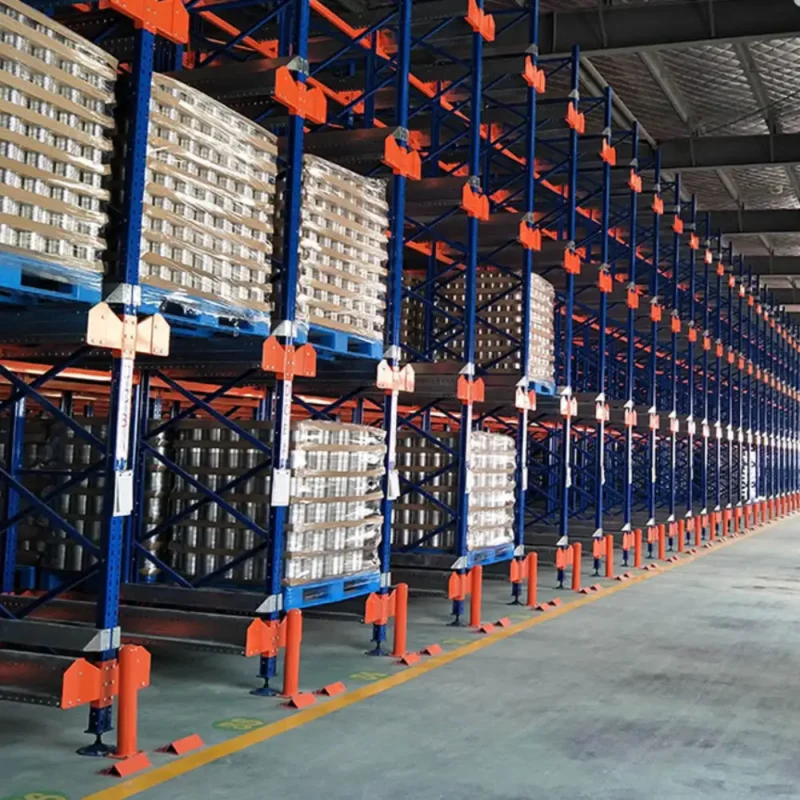
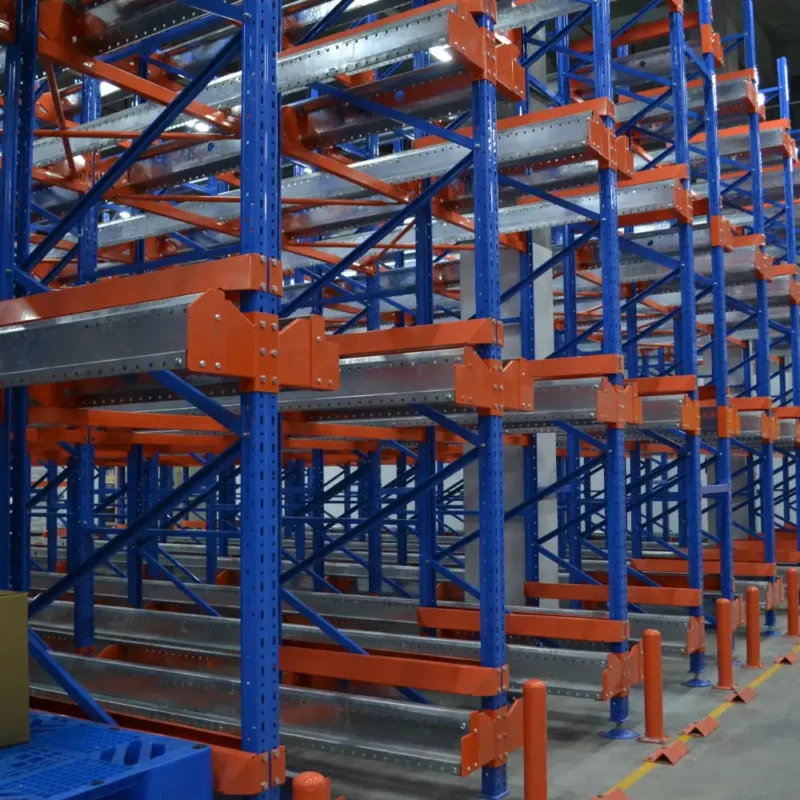
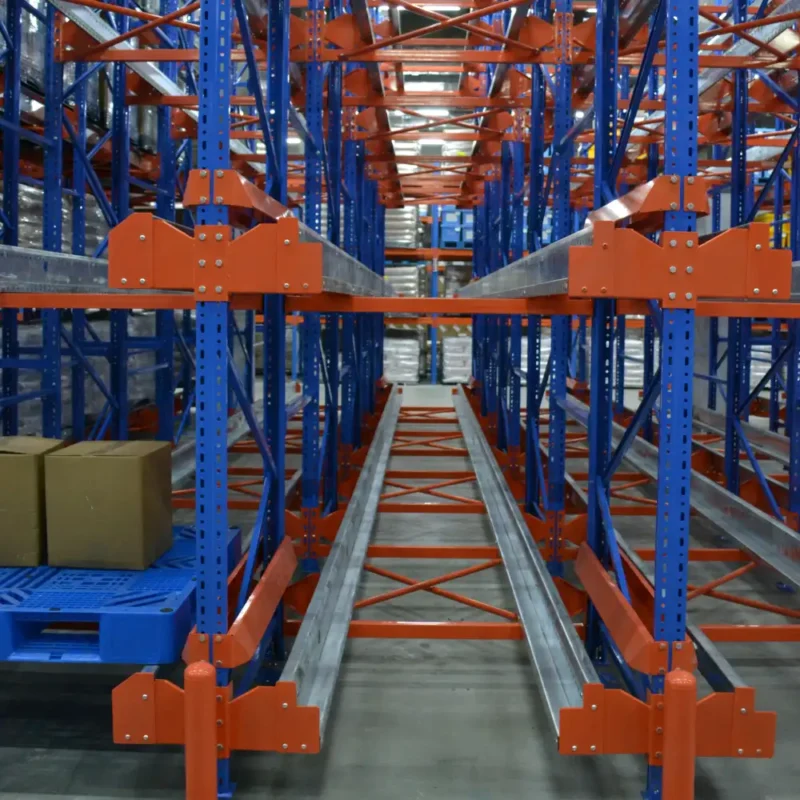
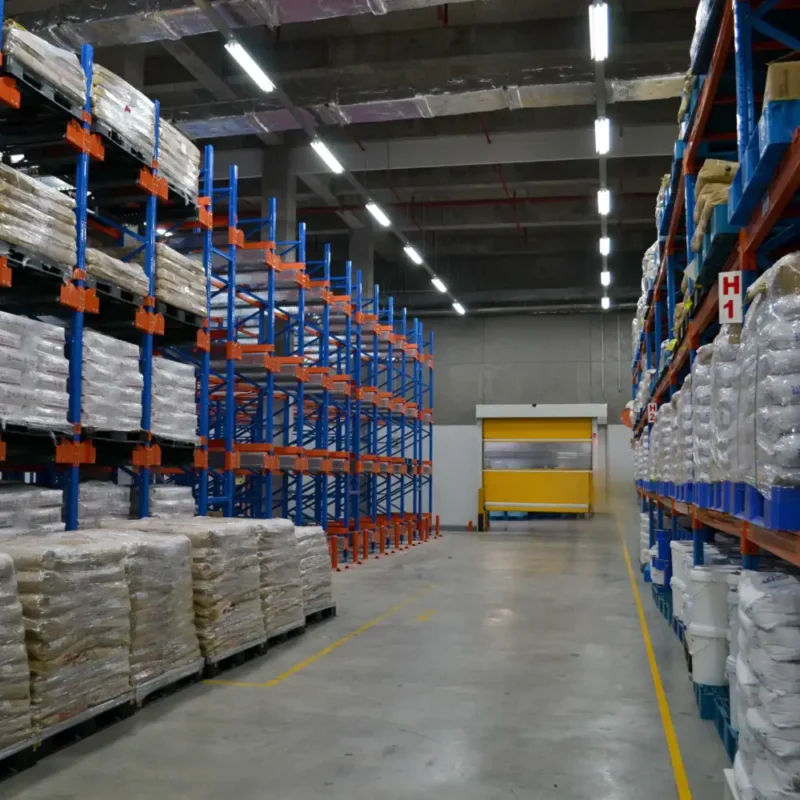
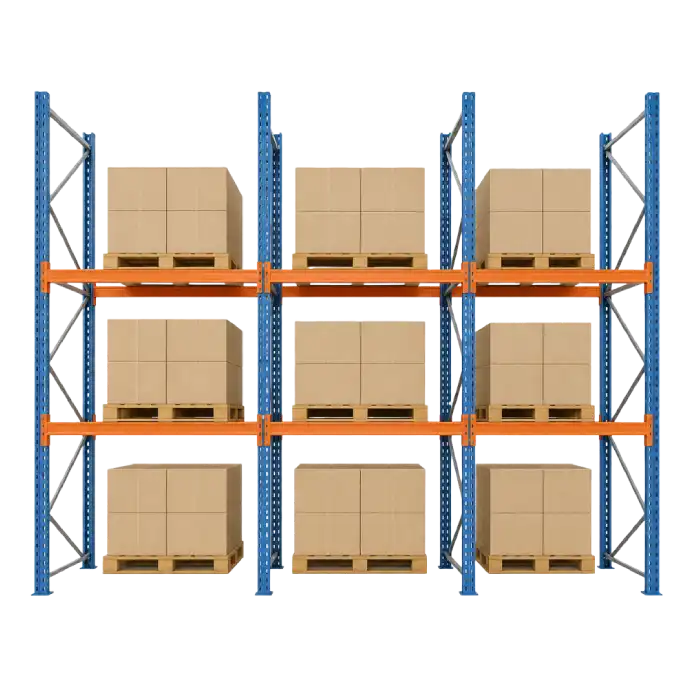
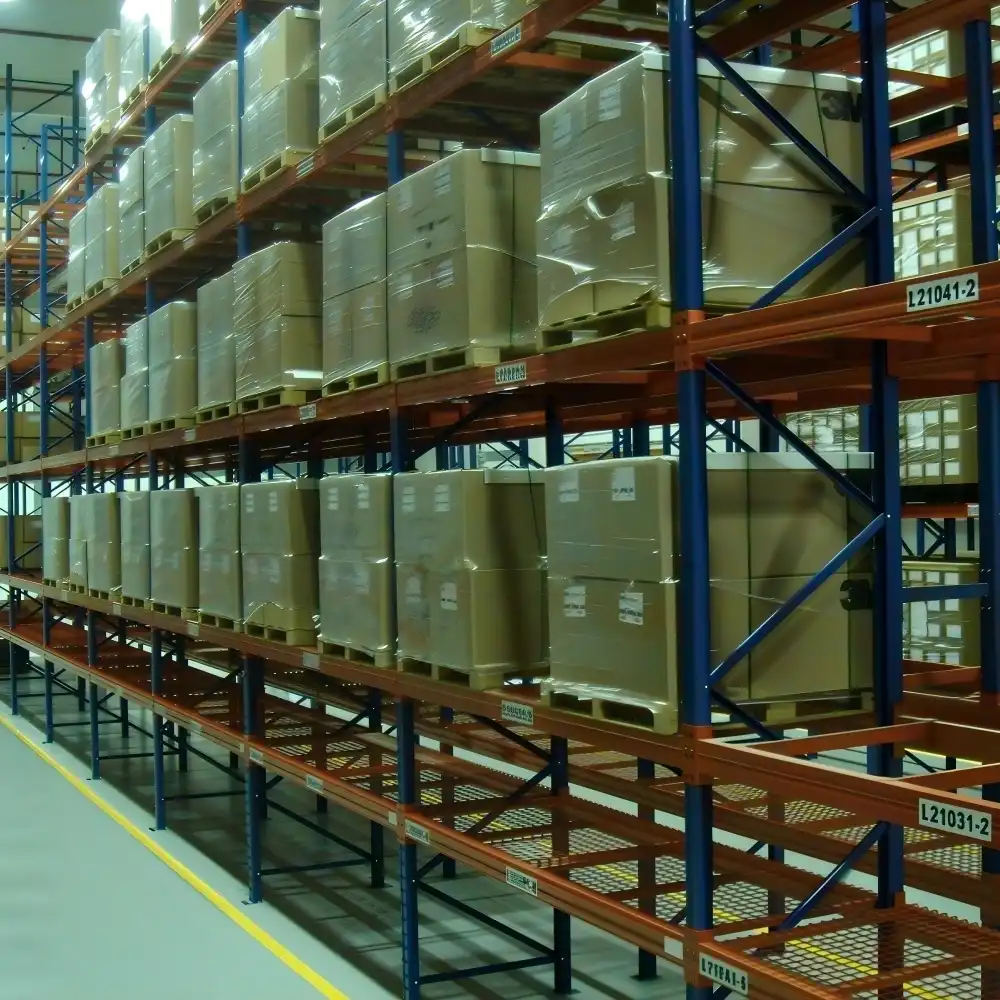
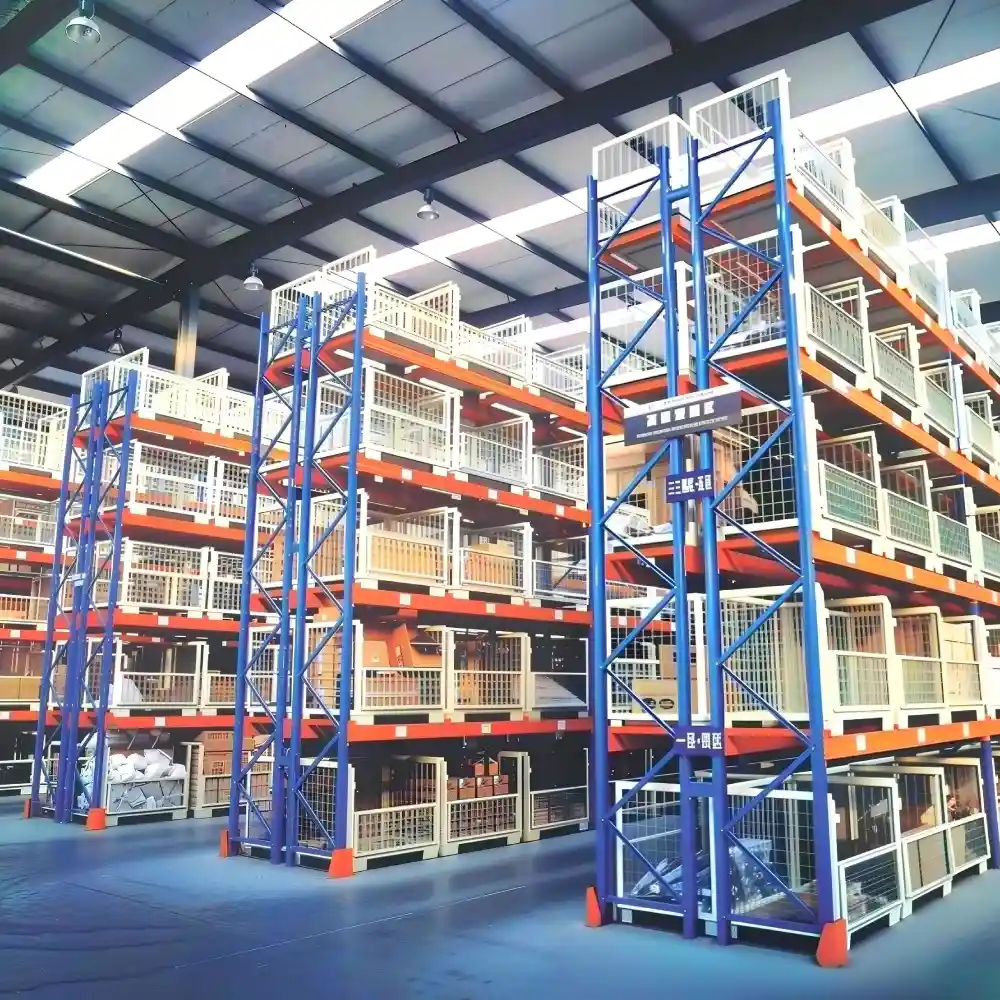
Shuttle pallet racking is a kind of semi-automated system with a space utilization rate of up to 90%.
Remotely controlled shuttles can transport goods quickly and efficiently.
Accurate and rapid operation is ensured through precise location control during storage and retrieval.
The 4-way shuttle pallet racking system combines dense warehouse racking, rail networks, shuttle vehicles, lifting equipment, and WCS/WMS control to create a flexible automated pallet flow solution. Unlike traditional shuttle systems, a 4-way shuttle is more than a smarter shuttle cart. It is a moving pallet transport unit that can switch lanes and change levels through an elevator interface. This gives the system excellent flexibility, high redundancy, and strong expansion capability for warehouses that need both density and automation.
It is well suited to phased investment because the track network, shuttles, lifts, and software can be deployed step by step.
Combining High Density with Full Automation:
Much more flexible than stacker crane AS/RS Additional storage capacity can be added without investing millions upfront in a full automated warehouse. The system can be built in phases: first the rail network, then the shuttles, then the elevators, and finally the WCS module.
One shuttle for multiple lanes and levels:
Through lane switching and level switching, a 4-way shuttle reduces the total number of vehicles needed. CAPEX may not always be lower, but OPEX and flexibility are significantly better.
Cold storage friendly and human-reduced operation:
Especially in -18°C and -25°C environments, machines are more reliable than people. The shuttle body can be designed with low-temperature grease, low-temperature batteries, and common protection ratings such as IP54 or IP65.
Can run according to business strategy:
FIFO, LIFO, FEFO, wave picking, or full pallet outbound movement can all be controlled by the dispatch algorithm rather than by manual searching.
A 4-way shuttle system is a combined engineering solution made up of the rack structure, rail system, shuttle vehicle, power and communication, elevator or conveyor interface, and software dispatching.
A) Rack Structure(High-density frame + rail network)
| Item | Specification / Description |
|---|---|
| Vehicle Type | Lithium battery 4-way shuttle vehicle, with battery or supercapacitor options. |
| Rated Load | Commonly 800–1500 kg; higher loads require custom engineering verification. |
| Travel Speed (Longitudinal / Lateral) | Approx. 60–120 m/min unloaded; 40–90 m/min loaded, depending on load and rail conditions. |
| Positioning Accuracy | ±3–10 mm level, using barcode / QR code / encoder + sensor fusion. |
| Power Supply | Lithium battery, commonly 48V or 80V, with automatic charging station or battery swap station. |
| Communication | Wi-Fi / 5GHz industrial wireless + WCS heartbeat monitoring. |
| Elevator / Vertical Transfer | One or more elevators, such as cabin-type, scissor-type, or chain-type, connecting multiple levels. |
| Dispatch Software | WCS (warehouse control system) with optional WMS integration. |
| Safety Devices | Front obstacle avoidance LiDAR, emergency stop edge protection, light and sound alarm, and anti-collision strips. |
Dual-axis drive system: Longitudinal drive wheels plus lateral travel wheel assemblies, with lifting or steering capability, ensure stable traction for fully loaded pallets in both X and Y directions.
Positioning system: QR code or barcode strips along the rail, or an encoder combined with LiDAR reference points, make “which storage location the shuttle reaches” a measurable and auditable data result instead of guesswork.
Chassis rigidity and ground clearance: The chassis must resist torsional force, and the top load platform must have sufficient flatness and guiding edges to prevent minor pallet displacement from causing pallet-jam alarms.
A 4-way shuttle system is not a straight track; it is a grid network.
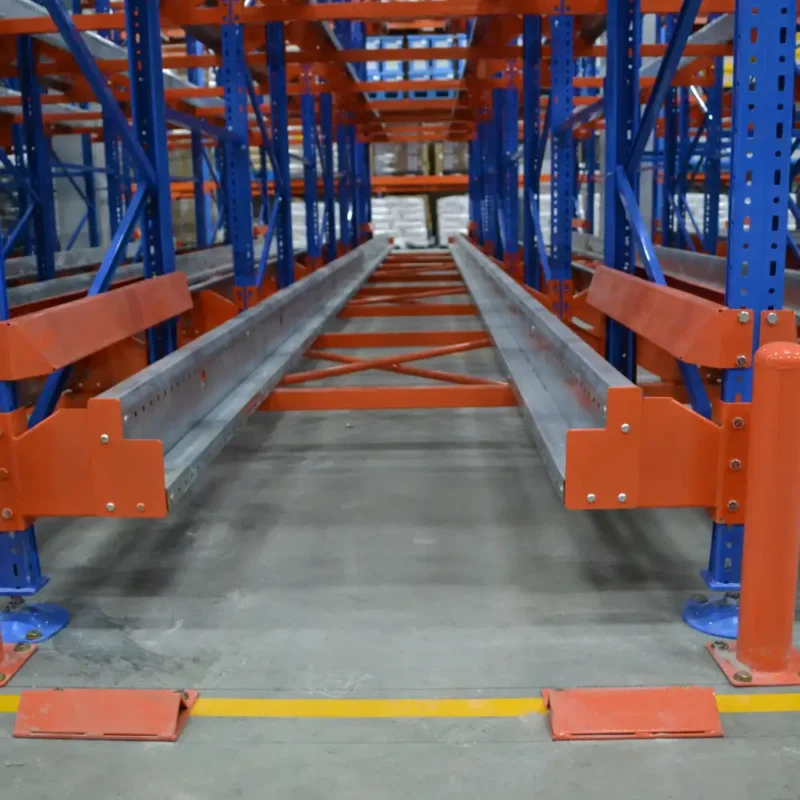
Main aisle rails: These carry the pallet’s longitudinal forward and reverse movement, similar to traditional shuttle rails.
Lateral lane-switching rails / crossover sections: At designated points, the shuttle can lift its wheel assembly or switch legs to move sideways from one lane to another, or enter an elevator docking position.
Key point: The crossover area must maintain smooth elevation transitions, with height differences controlled to a fraction of a millimeter. Otherwise, every lane change becomes a combination of impact and accelerated wear. This factor is more critical to service life than raw vehicle power.
Entry guide plates / guide strips: These help align the pallet and reduce repeated centering adjustments.
Mechanical end stops and buffer elements: These prevent extreme overtravel and provide a double safety layer together with software limit protection.
Maintenance locking pins / warning sign positions: When personnel enter the lane for inspection, physical locking provides a greater sense of safety than software-only lockout.
Typical Applications
4-Way Shuttle Pallet Racking is an advanced automated warehouse storage solution designed to maximize storage density, improve inventory control, and enhance operational efficiency. It is widely used in high-throughput distribution centers, cold storage facilities, manufacturing plants, and e-commerce fulfillment centers. This FAQ section answers common questions about shuttle racking technology, warehouse automation, storage capacity, inventory management, software integration, and project costs.
4-way shuttle pallet racking is a fully automated high-density storage system that uses intelligent shuttle robots to transport pallets throughout the warehouse.
Unlike traditional storage systems, shuttle robots can move in four directions, enabling flexible pallet handling and maximizing storage capacity within limited warehouse space.
The system uses automated shuttle vehicles, vertical lifts, conveyors, and warehouse control software to move pallets between storage locations and picking stations.
Shuttle robots travel across storage lanes and levels, allowing fast and accurate pallet handling with minimal human intervention.
4-way shuttle pallet racking significantly increases storage density, improves warehouse throughput, reduces labor dependency, and enhances inventory accuracy.
The system is especially suitable for facilities seeking warehouse automation and long-term operational efficiency.
Yes. The system can be configured to support both First In First Out (FIFO) and Last In First Out (LIFO) inventory management strategies.
This flexibility allows businesses to optimize inventory control according to product characteristics and operational requirements.
Industries commonly using 4-way shuttle systems include e-commerce, food and beverage, pharmaceuticals, manufacturing, cold storage, retail distribution, and third-party logistics operations.
These industries benefit from automated pallet handling and improved warehouse productivity.
Yes. 4-way shuttle systems can be customized according to warehouse dimensions, storage capacity requirements, pallet specifications, and automation goals.
Customized engineering ensures optimal performance and scalability.
Load capacity depends on shuttle models, pallet dimensions, rack structure, and engineering specifications.
Industrial systems are designed to accommodate a wide range of pallet weights while maintaining reliable automated operation.
Yes. 4-way shuttle systems are widely used in cold storage and freezer warehouses because they reduce forklift activity and maximize storage density.
Automation also improves efficiency in low-temperature environments where manual operations are more challenging.
Traditional pallet racking relies on forklifts for pallet handling, while shuttle racking uses automated robots to transport pallets.
This automation improves efficiency, reduces labor requirements, and enhances inventory management accuracy.
Yes. Most systems can integrate with Warehouse Management Systems (WMS), Warehouse Control Systems (WCS), and ERP platforms.
Software integration enables real-time inventory tracking and automated warehouse operations.
High-quality shuttle racking systems can operate for more than 15 years when properly maintained.
Routine maintenance, software updates, and preventive inspections help ensure long-term performance.
The cost depends on storage capacity, warehouse dimensions, automation requirements, software integration, shuttle quantity, and project complexity.
Most projects require a customized engineering assessment and quotation based on operational goals and warehouse specifications.