Phone:
(86)138-1388-1779
Physical address:
6296 Donnelly Plaza
Ratkeville, Bahamas.

Phone:
(86)138-1388-1779
Physical address:
6296 Donnelly Plaza
Ratkeville, Bahamas.
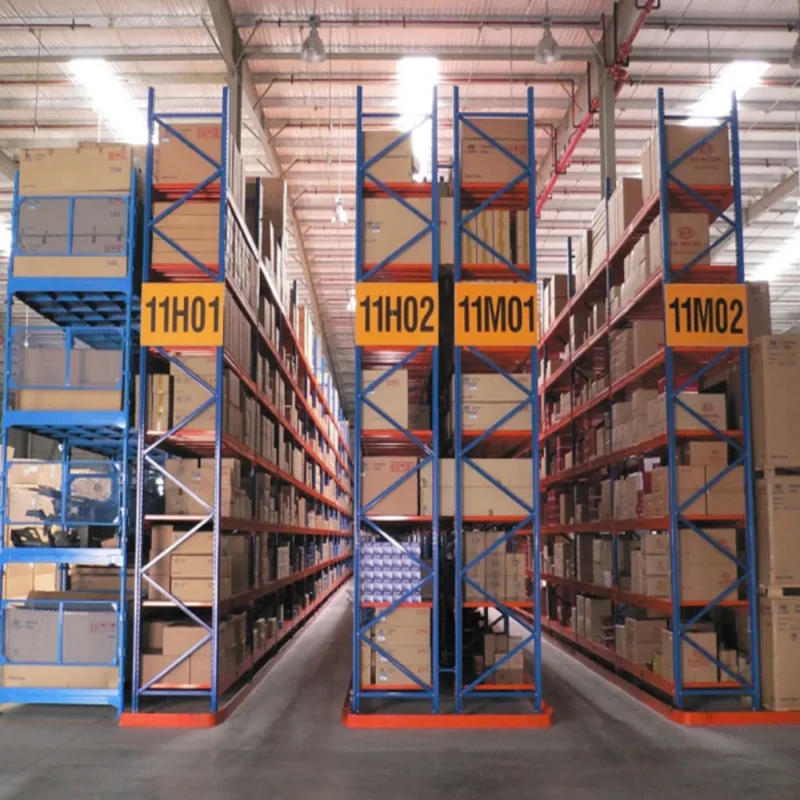
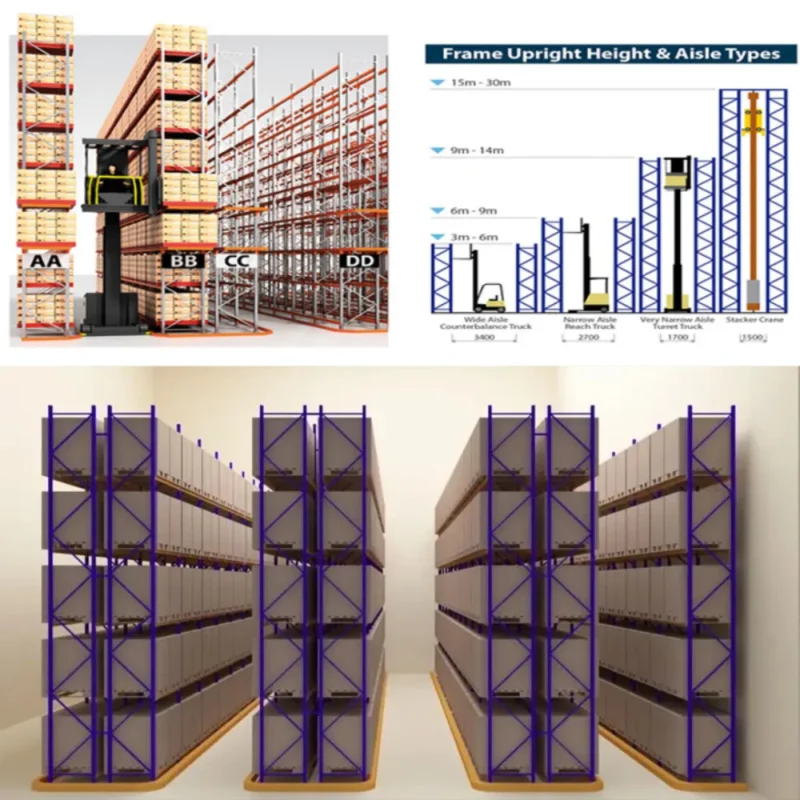
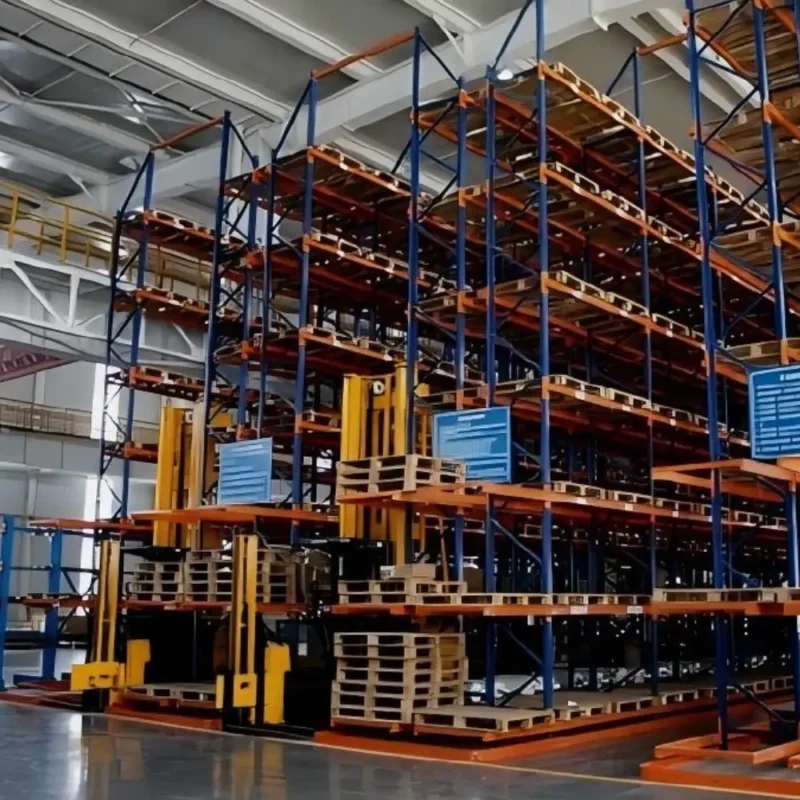
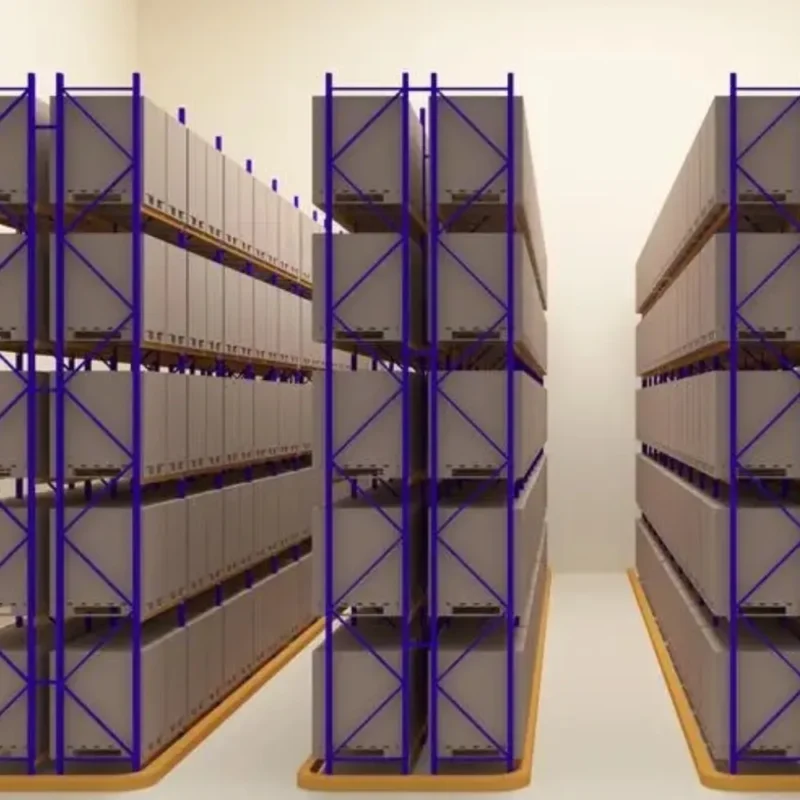
VNA racking uses three-direction forklifts with much narrower aisles.
Aisle width is about 1600–2000mm, increasing storage space by around 20%.
Guide rails assist forklift movement, and customized designs are available.
——Make the most of vertical space and unlock storage limits with a slim, tall design.
When warehouse rent keeps rising year after year, yet your building height is already 10 meters or more, continuing to use standard selective pallet racking with 3.5-meter aisles is a waste of valuable space.
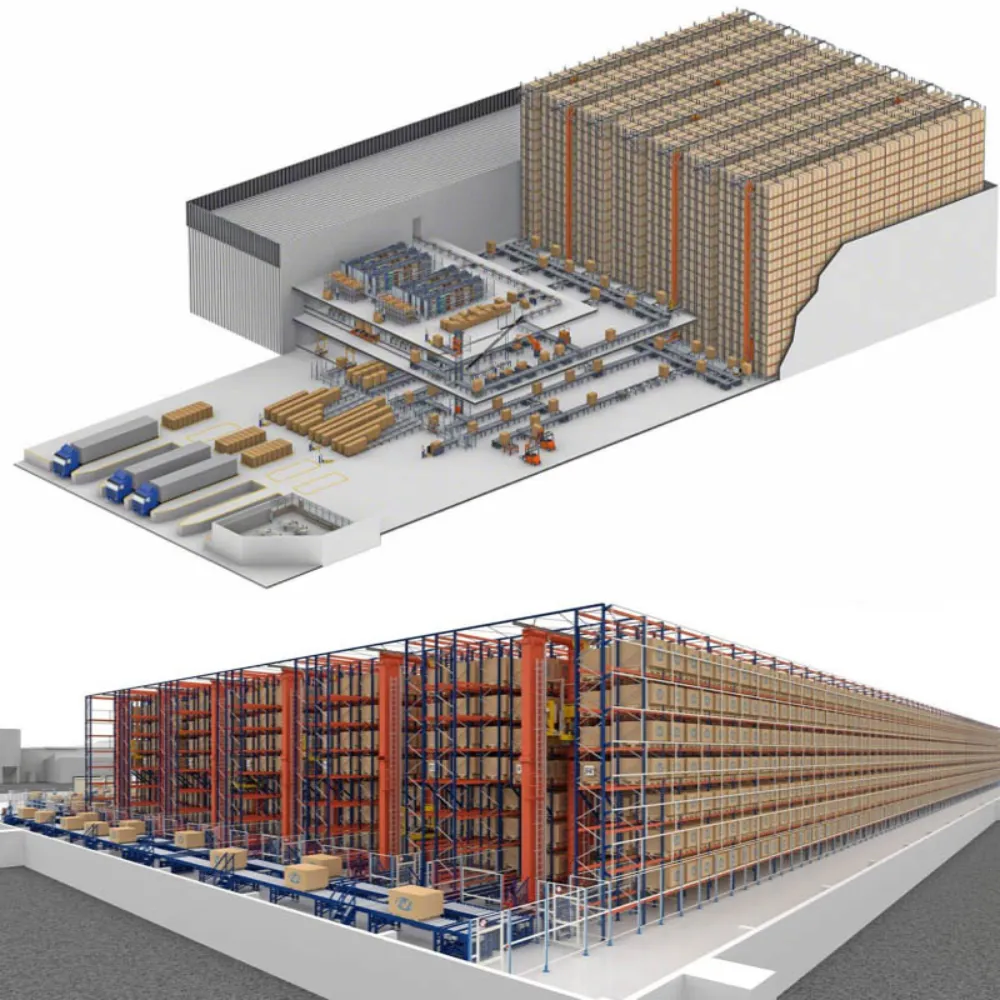
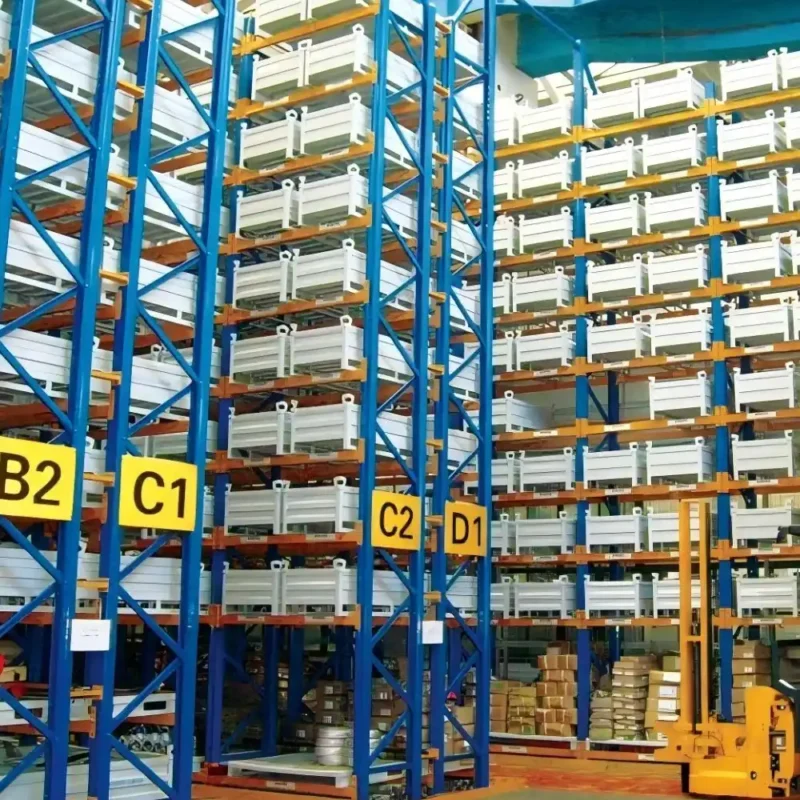
Very Narrow Aisle (VNA) racking reduces forklift aisle width to about 1.6 to 2.0 meters and forces the forklift to travel precisely along guide rails, leaving much more room for storage.
When paired with a dedicated turret truck, VNA systems can easily reach heights above 15 meters, helping your warehouse gain 40% to 60% more storage capacity without expanding the building footprint.
Key advantages: Maximum space utilization · Extremely high storage density · 100% accessibility
Although the main structure of VNA racking is similar to selective pallet racking, its requirements for upright plumbness and floor accuracy are far stricter.
| Item | Specification / Description | Notes |
|---|---|---|
| Rack Type | Very Narrow Aisle (VNA) racking | Must be used with a dedicated turret truck |
| Compatible Forklift | Guided / wire-guided / rail-guided turret truck | Forks can rotate 180° |
| Aisle Width | 1600 mm to 2000 mm | Depends on forklift model and pallet size |
| Rack Height | Up to 15,000 mm to 18,000 mm | Limited by turret truck lifting height |
| Load per Pallet | 500 kg to 2000 kg standard / up to 3000 kg customized | Requires reinforced uprights and beams |
| Beam Length | 2300 mm / 2700 mm / 3300 mm commonly used | Determines 2 to 3 pallets per level |
| Upright Profile | Heavy-duty 90×70, 100×95, 120×95 mm upright columns | Must resist lateral wind loads at height |
| Guide Rail System | Floor-mounted guide rails / top anti-sway rails | The lifeline of the VNA system |
| Surface Finish | Electrostatic powder coating (standard) / hot-dip galvanizing (cold storage) | Custom RAL colors available |
| Safety Components | Upright foot guards, back bracing, top bracing, anti-collision barriers | Mandatory to prevent high-level impact |
High rigidity upright columns are used to provide strong bending resistance and to reduce sway at heights of 15 meters or more.
During installation, plumbness must be controlled very strictly, usually within H/1000, to ensure accurate turret truck positioning and safe operation.
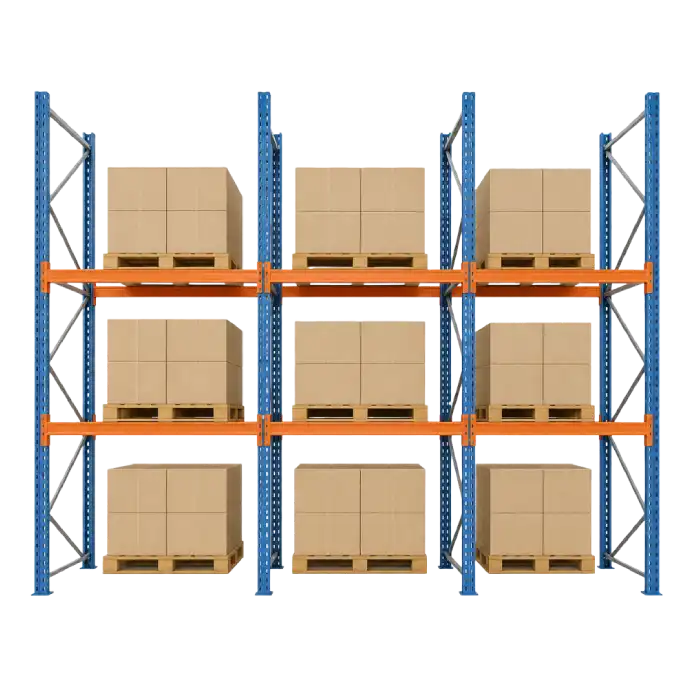
High-strength P-beams provide low deflection and strong load capacity.
Beam connectors are equipped with safety pins to prevent accidental beam dislodgement caused by vibration during high-level forklift operations.
Floor-mounted guide rails keep the forklift moving in a straight line and help prevent aisle deviation.
Top guide bars and cross bracing further reduce side sway when the turret truck is operating at height.
VNA racking makes excellent use of vertical space and reduces aisle width to about 50% to 60% of standard pallet racking.
It delivers storage density close to drive-in racking while still keeping 100% selective access to every pallet.
Because storage pressure is moved upward, VNA systems are especially suitable for leased warehouses and locations with expensive land costs.
Turret trucks can work quickly in narrow aisles without turning around, and the system can be combined with RF terminals for digital warehouse management.
High-bay cold storage: VNA makes full use of refrigerated space and helps reduce the time operators spend inside the freezer.
Electronics and automotive parts: Ideal for warehouses with many SKUs, high-value goods, and a need for 100% access.
Third-party logistics (3PL): A strong choice for warehouses that must store large volumes of customer goods within limited floor space and still maintain high throughput.
Very Narrow Aisle (VNA) Pallet Racking Systems are designed to maximize warehouse storage capacity by reducing aisle widths while maintaining direct access to every pallet position. They are widely used in logistics centers, manufacturing facilities, distribution warehouses, and e-commerce fulfillment operations. This FAQ section answers common questions about VNA racking design, storage density, forklift requirements, load capacity, warehouse applications, customization options, and project costs.
A Very Narrow Aisle (VNA) pallet racking system is a high-density warehouse storage solution that reduces aisle widths to maximize storage capacity while maintaining direct access to every pallet.
By minimizing aisle space and increasing rack rows, VNA systems help warehouses store more inventory within the same building footprint.
VNA pallet racking uses specialized forklifts operating within narrow aisles to retrieve and store pallets efficiently.
These forklifts are designed to work safely in restricted aisle widths while providing access to high-level storage locations.
VNA pallet racking increases storage density, improves warehouse space utilization, and allows direct access to every pallet.
Compared with conventional selective racking, VNA systems can significantly increase the number of pallet positions available within the same warehouse.
VNA warehouses commonly use turret trucks, articulated forklifts, and dedicated VNA forklifts.
The choice of equipment depends on aisle width, rack height, pallet dimensions, and warehouse operating requirements.
VNA pallet racking is widely used in logistics centers, manufacturing facilities, retail distribution warehouses, pharmaceutical storage facilities, and e-commerce fulfillment centers.
These industries benefit from increased storage capacity and efficient inventory accessibility.
Yes. VNA systems can be customized according to warehouse dimensions, pallet specifications, load capacities, and operational objectives.
Custom engineering helps maximize storage performance while maintaining operational safety.
Load capacity depends on rack design, beam specifications, pallet size, and engineering calculations.
Industrial VNA systems can be designed to accommodate a wide range of pallet weights while ensuring structural integrity.
Yes. VNA pallet racking is particularly effective in high-bay warehouses because it maximizes both horizontal and vertical storage capacity.
This combination helps businesses achieve higher storage density without sacrificing pallet accessibility.
Both systems provide direct access to every pallet position.
However, VNA racking reduces aisle width significantly, allowing more storage racks to be installed and increasing overall warehouse capacity.
Yes. Many VNA warehouses integrate Warehouse Management Systems (WMS), barcode scanning, RFID technology, and inventory tracking software.
These integrations improve inventory accuracy and operational efficiency.
High-quality VNA pallet racking systems can last more than 15 years with proper maintenance and routine inspections.
Regular safety checks and load management practices help extend service life.
The cost depends on rack height, storage capacity, warehouse layout, forklift requirements, and project complexity.
Most projects require customized engineering and quotations based on specific warehouse storage objectives and operational requirements.