Phone:
(86)138-1388-1779
Physical address:
6296 Donnelly Plaza
Ratkeville, Bahamas.

Phone:
(86)138-1388-1779
Physical address:
6296 Donnelly Plaza
Ratkeville, Bahamas.
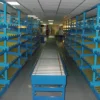
Suitable for storing large quantities of similar goods with high space efficiency.
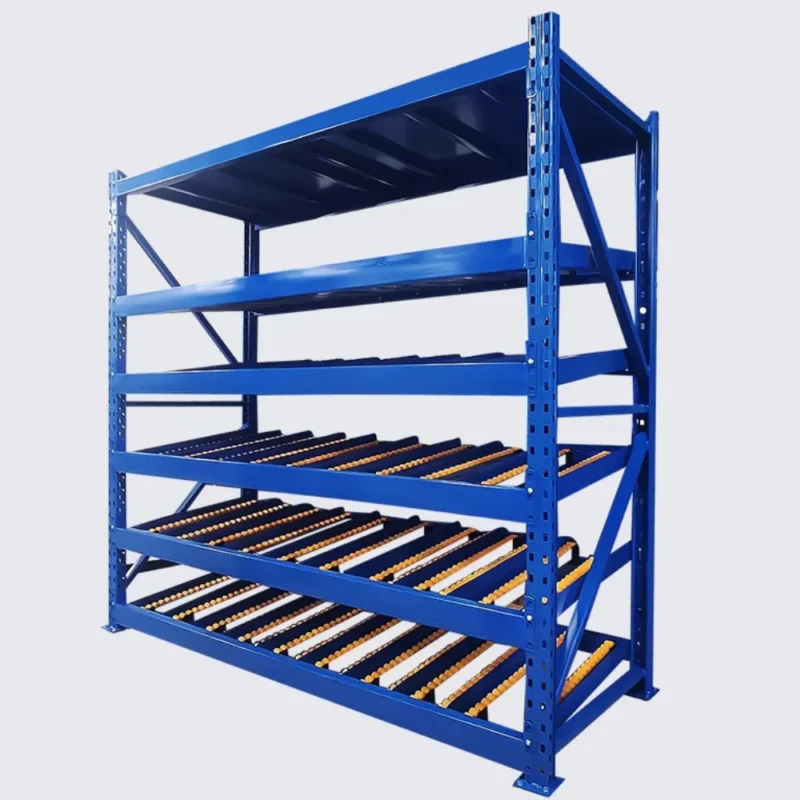
Uses durable plastic rollers with low friction, moisture resistance, and strong load capacity.
Frame is made of sheet metal or aluminum, widely used in logistics and automated facilities.
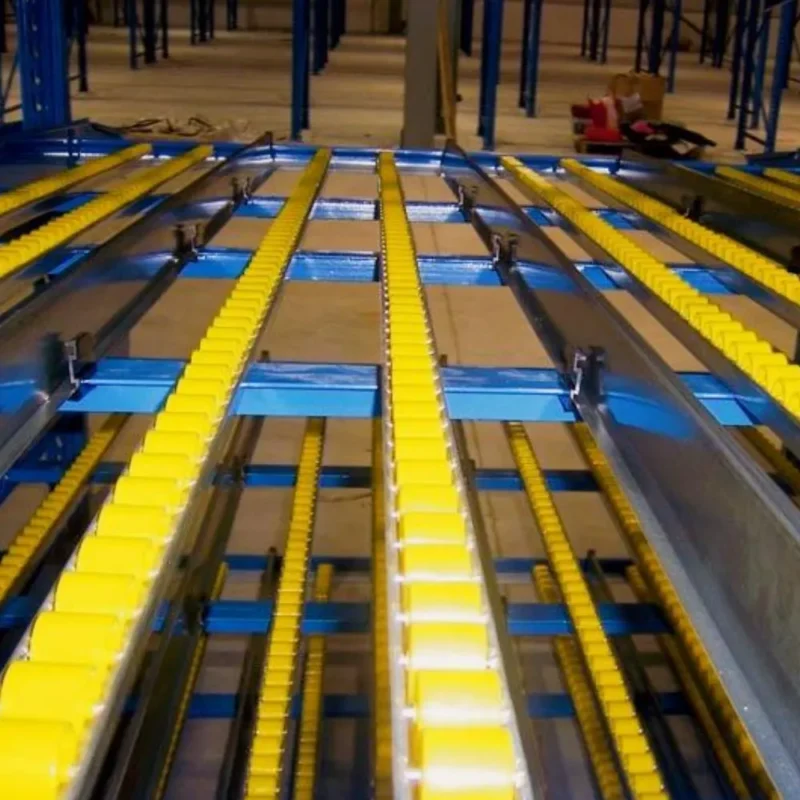
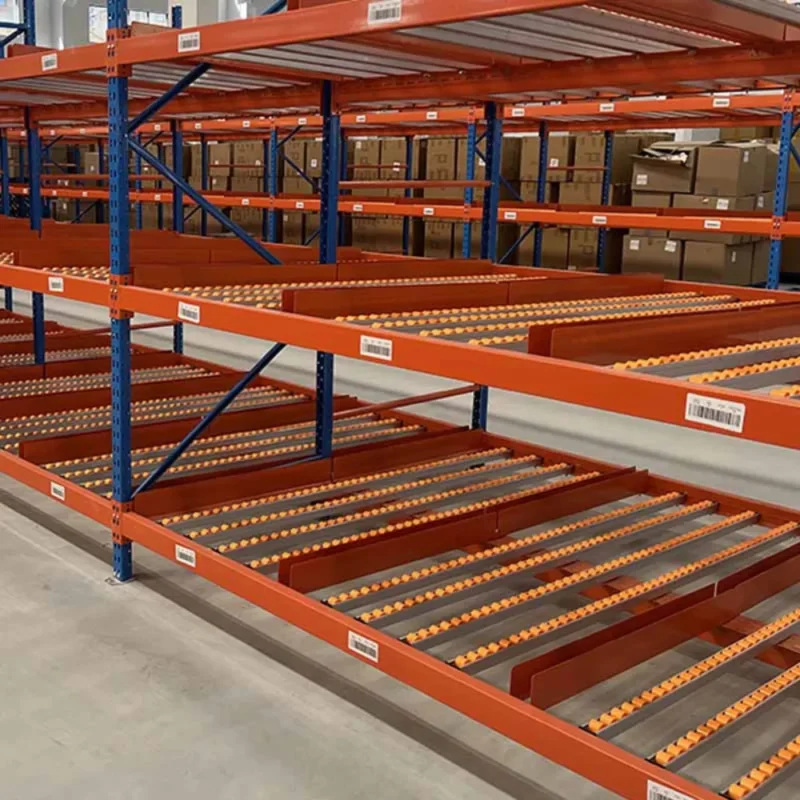
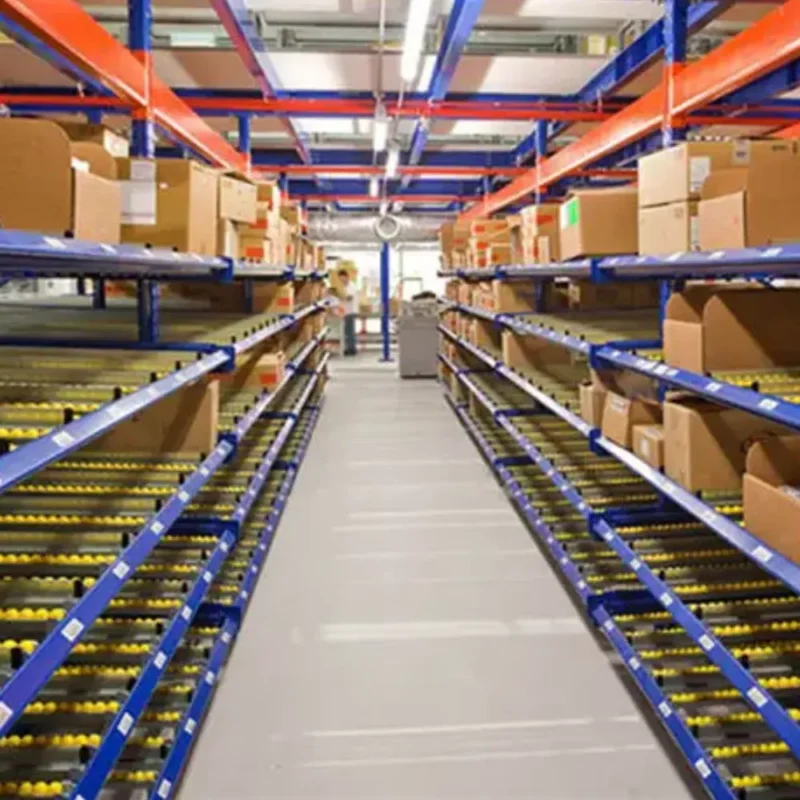
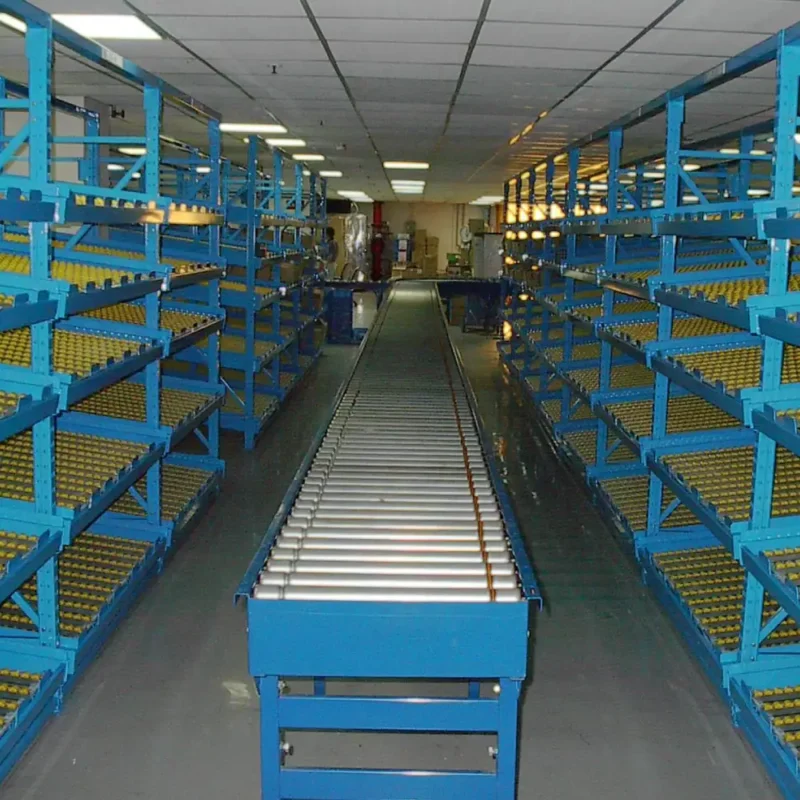
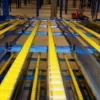
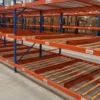
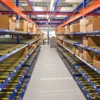
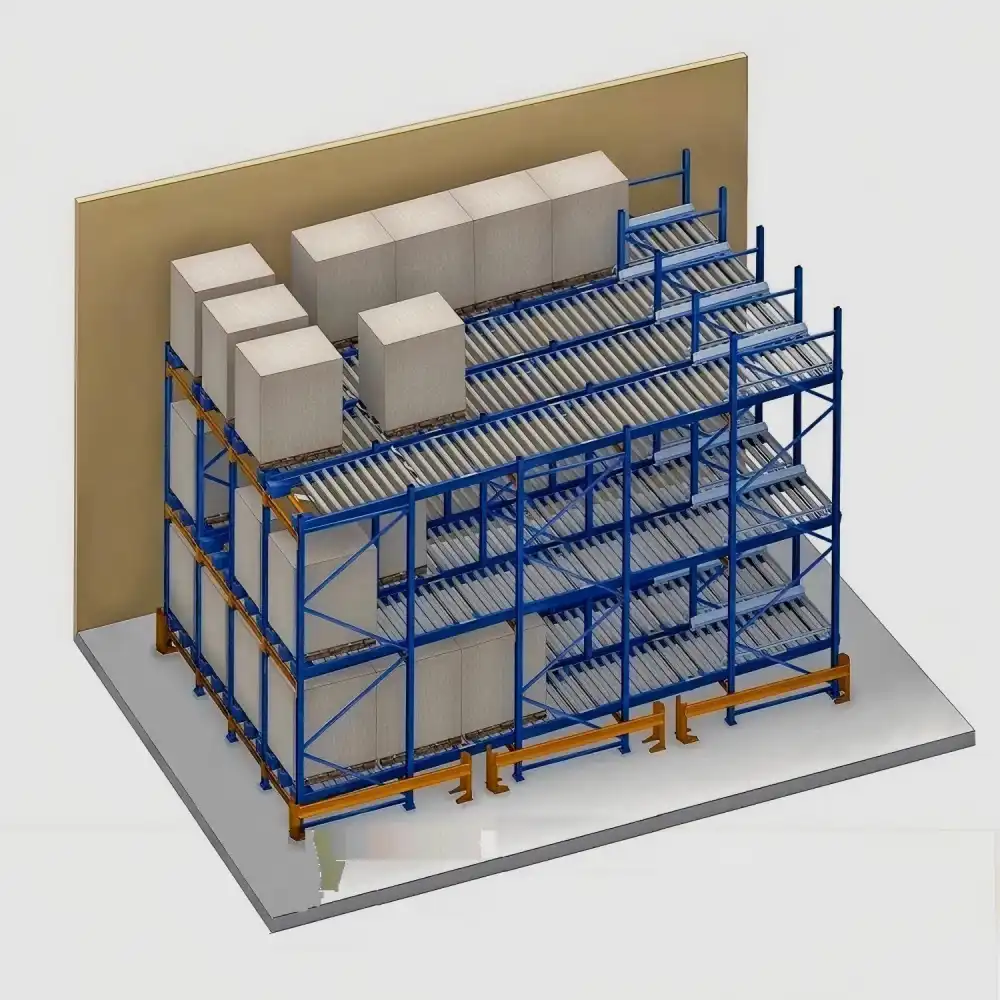
Gravity flow racking, also known as pallet flow racking, uses inclined roller tracks to move pallets from the loading end to the picking end by gravity. Pallets are loaded at the higher end of each lane and gently travel to the discharge side. Speed controllers, separators, and buffer stops help keep the system stable and safe. It is a reliable FIFO warehouse storage system for cold storage, food, beverage, pharmaceutical, and high-turnover pallet operations.
This system is ideal for warehouses that need controlled turnover, reduced handling time, and strong storage density.
| True FIFO | High Density | No Power | Safer Operation |
| Automatic first-in-first-out inventory rotation. | Fewer aisles and better use of warehouse space. | Gravity-driven system with low maintenance. | Separated loading and picking ends improve safety. |
| Item | Specification / Description | Notes |
|---|---|---|
| Rack Type | Gravity Flow / Pallet Flow Racking | FIFO controlled flow system |
| Suitable Pallets | Customer required box or container size | Best with rigid stringer or steel pallets |
| Load per Pallet | 500 kg to 1500 kg per lane; up to 2000 kg customized | Depends on roller and support configuration |
| Lane Length | 6 m, 8 m, 10 m typical | Usually 4 to 10 pallets deep |
| Pitch Angle | 3° to 5° typical | Balanced for smooth, safe pallet movement |
| Speed Control | Approx. 0.2 to 0.3 m/s controlled flow | Controlled by speed dampers / braking rollers |
| Roller System | Galvanized rollers with sealed bearings | Low noise, wear-resistant, low maintenance |
| Roller Track System | The roller track is the core of the system. It must match pallet bottom structure to ensure smooth movement, low noise, and reliable FIFO flow. |
| Speed Controller | The speed controller keeps pallets moving at a stable speed, preventing overspeed, impact, and lane instability. |
| Discharge End Safety | Buffer stops, separators, and guide plates reduce impact force and prevent the next pallet from releasing too early. |
| Lane Symmetry | Each lane must remain level and straight. Proper installation is critical for long-term performance and pallet compatibility. |
Typical Applications
Gravity Flow Pallet Racking Systems are widely used in warehouses, distribution centers, cold storage facilities, and manufacturing operations that require efficient FIFO inventory management. This FAQ section answers common questions about pallet flow racking design, storage density, inventory rotation, load capacity, warehouse applications, customization options, and project costs.
Gravity flow pallet racking systems are high-density warehouse storage solutions that use inclined roller lanes to move pallets automatically from the loading side to the picking side using gravity.
These systems are designed to improve inventory rotation, increase storage density, and reduce forklift travel. They are particularly effective for operations handling high volumes of palletized goods with strict inventory control requirements.
Pallets are loaded at the higher end of a sloped lane and move automatically along gravity rollers toward the picking face.
As pallets are removed from the front, the remaining pallets advance automatically, ensuring continuous product flow and efficient inventory management.
Gravity flow pallet racking improves warehouse efficiency by reducing forklift travel, increasing storage density, and supporting automatic pallet rotation.
The system also helps reduce labor costs, improve order picking speed, and maximize available warehouse space.
FIFO stands for First In First Out, meaning the oldest inventory is picked and shipped before newer inventory.
This inventory method is especially important for food products, pharmaceuticals, beverages, and other goods with expiration dates or quality-control requirements.
Gravity flow pallet racking is commonly used in food and beverage warehouses, pharmaceutical facilities, cold storage warehouses, manufacturing plants, logistics centers, and retail distribution operations.
These industries benefit from accurate stock rotation and high-density storage capabilities.
Yes. Gravity flow pallet racking systems can be engineered according to pallet dimensions, load capacities, warehouse layouts, and operational requirements.
Custom designs ensure optimal storage performance and long-term operational efficiency.
Load capacity depends on structural design, roller specifications, pallet dimensions, and project requirements.
Industrial pallet flow systems can be designed to support light-duty inventory as well as heavy palletized loads.
Yes. Gravity flow pallet racking is widely used in cold storage and frozen food warehouses because it maximizes storage density while supporting FIFO inventory rotation.
The system can be manufactured using corrosion-resistant materials suitable for low-temperature environments.
Gravity flow racking uses roller lanes to achieve FIFO inventory rotation, while drive-in racking typically uses a Last In First Out (LIFO) storage method.
Operations requiring product traceability and inventory rotation often prefer pallet flow systems.
Most standard wooden pallets, plastic pallets, and steel pallets can be accommodated when the roller system is engineered correctly.
Pallet quality and dimensions are evaluated during system design to ensure reliable flow performance.
High-quality gravity flow pallet racking systems can last more than 15 years with proper maintenance and periodic inspections.
Routine maintenance helps preserve roller performance and structural integrity.
The cost depends on rack height, lane depth, pallet weight, roller specifications, warehouse layout, and project complexity.
Most projects require customized engineering and quotations based on specific storage objectives and operational requirements.