电话:
(86)138-1388-1779
物理地址:
6296 多内利广场
拉特克维尔,巴哈马。.

电话:
(86)138-1388-1779
物理地址:
6296 多内利广场
拉特克维尔,巴哈马。.
Pallet racking systems store pallets vertically so warehouses use height instead of floor space.
The main types are selective, drive in, push back, pallet flow, and shuttle racking, each balancing storage density against access speed.
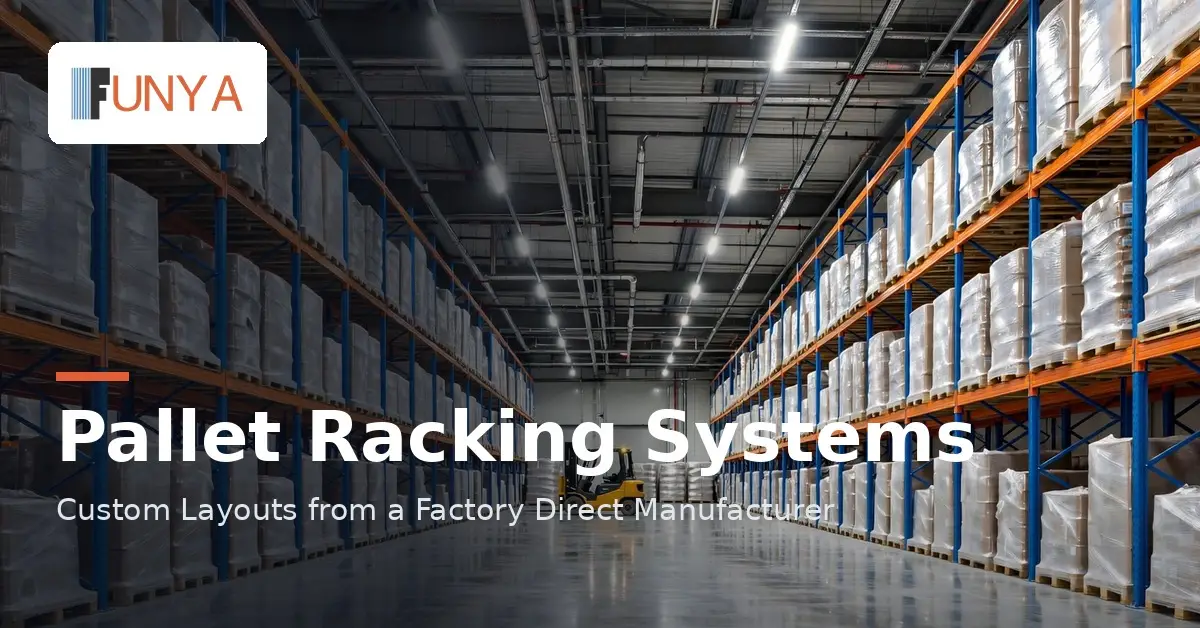
Pallet racking systems store pallets vertically so warehouses use height instead of floor space. The main types are selective, drive in, push back, pallet flow, and shuttle racking, each balancing storage density against access speed.
This guide compares them and links to detailed pages so you can choose the right system for your operation.
What this page gives you:
Pallet racking systems are steel structures that store palletized goods on horizontal beams across multiple levels, using vertical space instead of floor area. A forklift places and retrieves pallets from aisles, and the racking type determines how dense the storage is and how fast each pallet can be reached.
The basic anatomy is the same across types. Upright frames stand vertically and anchor to the floor. Beams span between frames and carry the pallets. Bracing, anchors, and safety components keep the structure stable under load and forklift activity. What changes between types is how pallets enter, sit, and leave the structure, and that is what this page maps out.
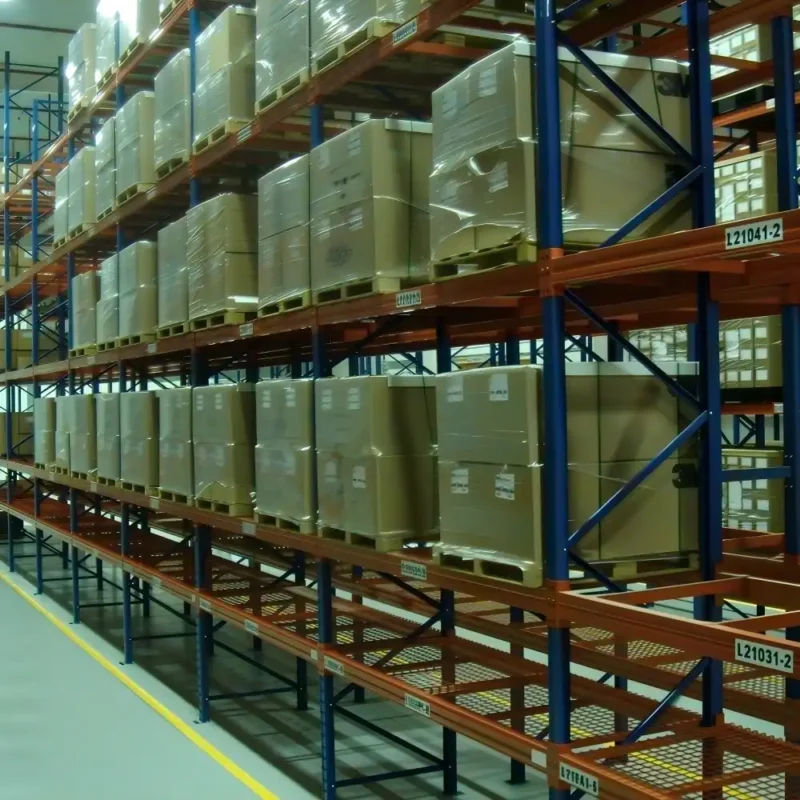
Selective pallet racking is the standard against which every other system is measured. Every pallet faces the aisle, so forklifts reach each position directly without moving anything else. Beam levels adjust along the uprights, which means the racking adapts when pallet heights or SKU profiles change instead of forcing a rebuild.
It suits warehouses with varied SKUs, frequent picking, and date sensitive stock, because full selectivity gives natural first in, first out rotation by location. The tradeoff is aisles: every row needs a working aisle, so it stores fewer pallets per square meter than denser systems.
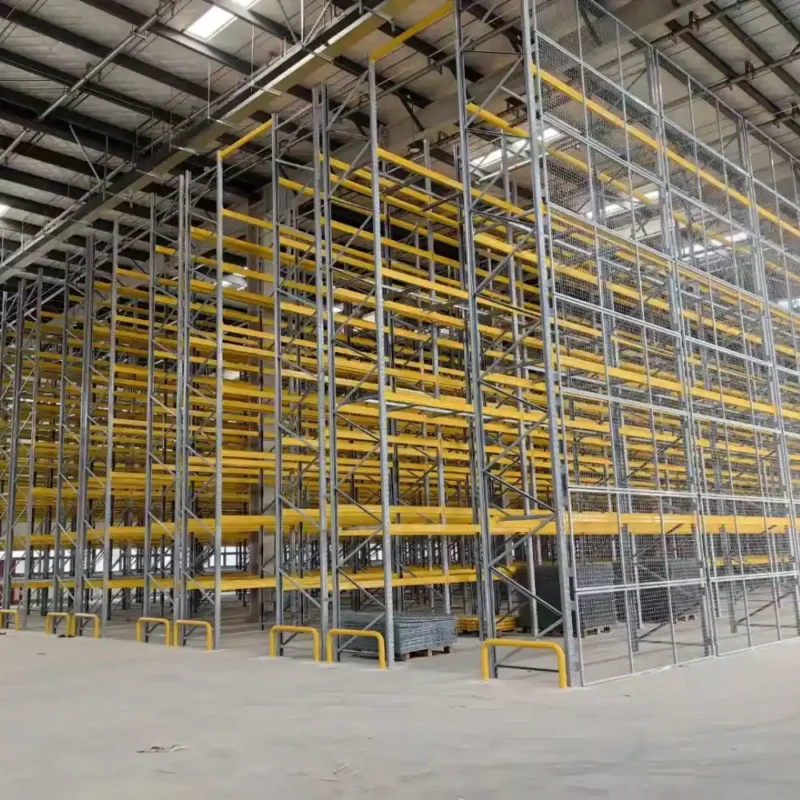
Heavy duty industrial pallet racking is the selective concept engineered for harder service: heavier pallets, taller frames, and intensive forklift traffic. Stronger upright profiles, heavier beams, and tighter engineering margins handle the loads that standard configurations cannot, which matters in manufacturing plants, building material distribution, and high throughput 3PL operations.
The buying question here is not whether you need racking but how much load the steel must carry over how many years of daily forklift cycles. That calculation sets the profiles, the bracing, and the anchoring.
See Industrial Pallet Racks: load focused configurations and engineering guidance for demanding applications.
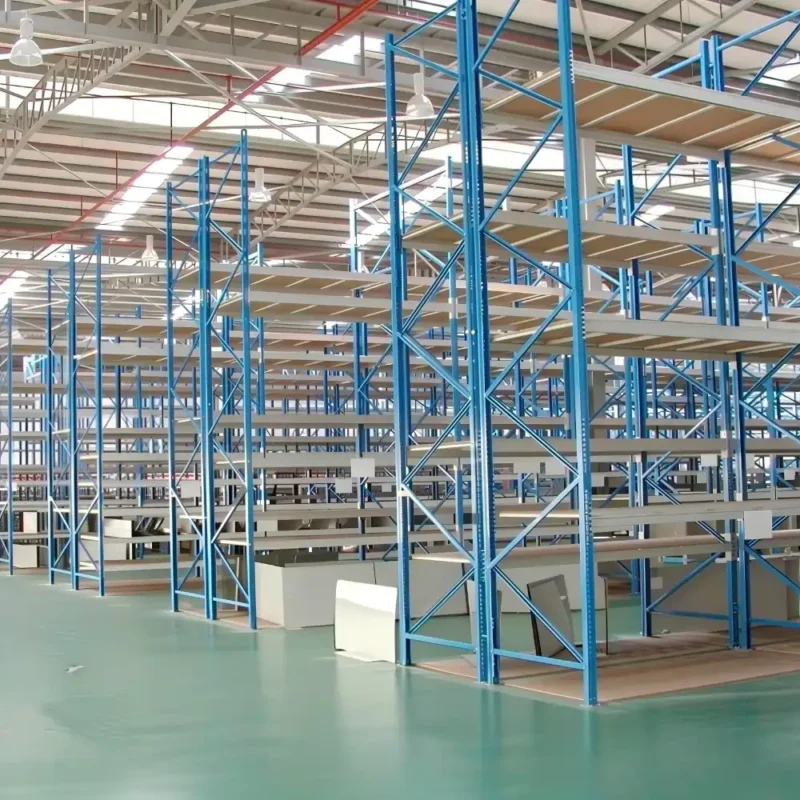
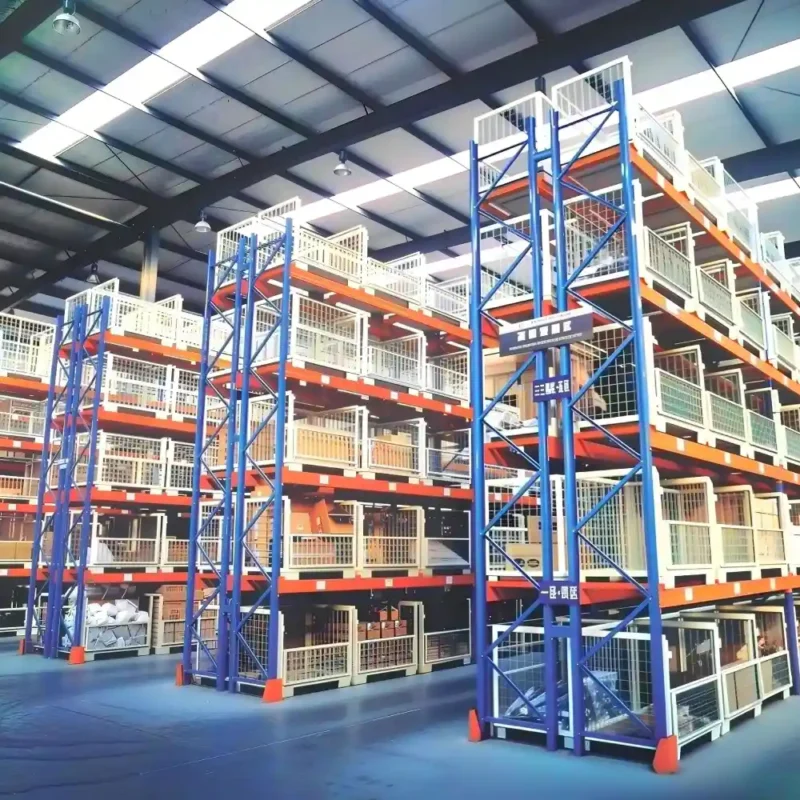
Warehouse pallet racking covers everyday storage needs with a balance of capacity, adjustability, and value. It is the right page for buyers who need reliable pallet storage without extreme loads or extreme density: distribution stock, finished goods, retail replenishment, and general warehousing.
Standard frame heights, common beam lengths, and proven configurations keep lead times short and installation simple. When the operation later needs denser or more specialized storage, these rows integrate with other systems in the same building.
Browse Warehouse Pallet Racks: standard configurations for general warehouse storage.
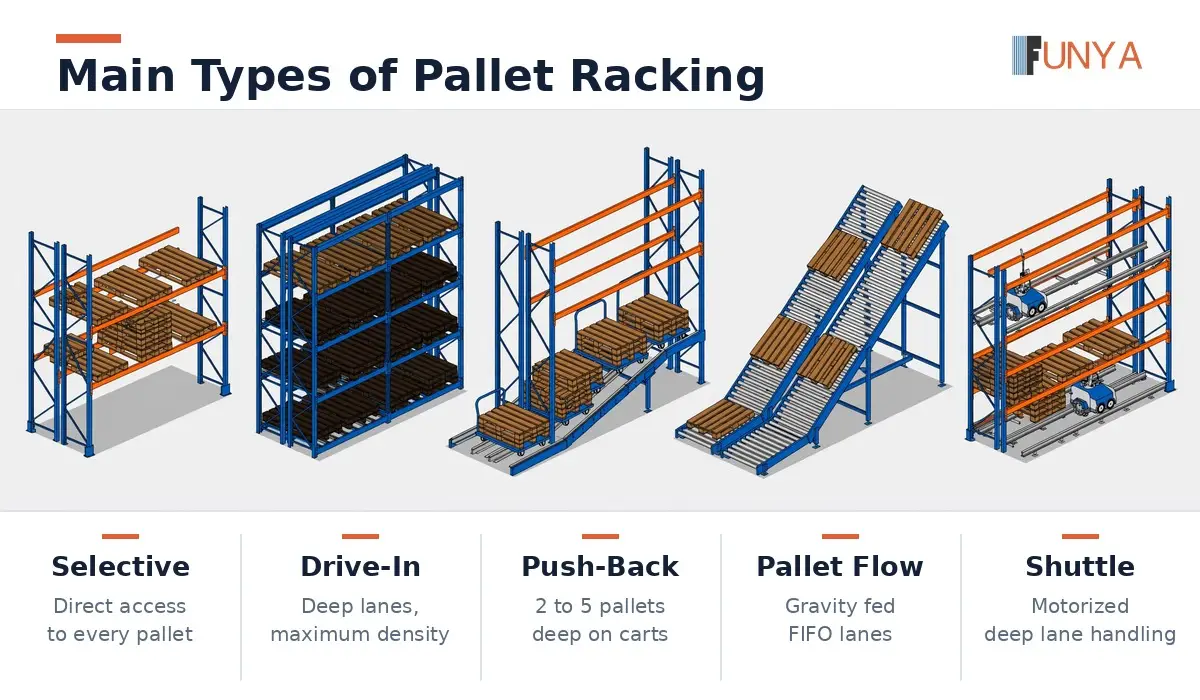
Forklifts drive directly into the rack lanes, which removes aisles and delivers the highest storage density of any conventional system. Drive in works on last in, first out rotation from a single entry side; drive through opens both ends for first in, first out. Both suit operations storing large quantities of a small number of SKUs, such as food and beverage bulk storage or seasonal inventory.
Explore Drive In Pallet Racking for density focused layouts.
Push back racking stores pallets two to five deep on carts that roll along inclined rails. Loading from a single aisle pushes the previous pallet back, which gives higher density than selective while keeping every lane accessible from the front. It suits medium SKU counts with moderate turnover per SKU.
Explore Push Back Pallet Racking for dynamic high density storage.
Pallet flow racking uses inclined roller lanes so pallets glide by gravity from the loading side to the picking side. It delivers true first in, first out rotation with high density, which makes it the standard choice for date sensitive goods, food distribution, and high throughput picking faces.
Explore Pallet Flow Racking for gravity fed FIFO storage.
Pallet shuttle systems use a motorized shuttle to carry pallets deep into the lanes, reaching drive in density with less forklift travel and faster cycle times. For fully automated warehouses, racking integrates with stacker cranes in AS/RS installations. These options suit high volume operations ready to invest in automation.
| System | 选择性 | Storage density | 最适合 |
| Selective / adjustable | 100 percent, every pallet accessible | 标准 | High SKU counts, frequent picking |
| Heavy duty selective | 100 percent | 标准 | Heavy pallets, intensive traffic |
| Drive in / drive through | Low, lane based | Very high | Few SKUs in bulk quantities |
| Push back | Medium, lane based | 高的 | Medium SKU counts, last in first out |
| Pallet flow | Medium, lane based | 高的 | Date sensitive goods, first in first out |
| Shuttle | Medium, lane based | Very high | High volume, semi automated |
Density figures describe relative performance, not guarantees. Actual pallet positions per square meter depend on building height, aisle widths, pallet sizes, and forklift type, all of which the layout review calculates for your project.
Choosing comes down to four factors weighed together. Get them right and the system pays for itself; get them wrong and the warehouse fights the racking for a decade.
Many SKUs with frequent picks point to selective racking, where every pallet is directly accessible. Few SKUs in large quantities point to drive in or push back, where density wins. Date sensitive goods add a rotation requirement that favors selective or pallet flow.
The trucks you own set the aisle widths, and aisle widths set the density math. Counterbalance forklifts need wide aisles; reach trucks and turret trucks work in narrower ones. Confirm the truck specification before finalizing any layout, because changing trucks later is far more expensive than planning correctly now.
Tall clear heights reward selective and VNA systems that reach upward; low buildings push the decision toward density at floor level. Sprinkler, lighting, and dock positions all constrain the usable envelope, so the layout starts from the building, not the catalog.
SKU profiles change, and the racking should survive those changes. Adjustable beam levels, extendable rows, and systems that can mix in one building protect the investment. A layout that only fits this year’s inventory is a layout you will replace.
Third party logistics providers mix selective rows for varied client stock with push back or flow lanes for anchor clients. Food and beverage distributors pair drive in bulk storage with flow racking for dated products. Retail and ecommerce fulfillment centers run selective racking for fast moving SKUs with carton flow at the pick face. Manufacturers store raw materials and finished goods in selective rows near production lines. Cold storage operations specify galvanized finishes and low temperature steel across whichever type fits the SKU profile.
FunYa Racking manufactures pallet racking systems in its own Nanjing facility and exports to project buyers worldwide. Every project starts with a layout review: the engineering team takes your warehouse dimensions, pallet sizes, load weights, and forklift data, then returns 2D/3D CAD drawings with a quotation. Load calculations follow the design standard your project requires. Export packing, shipping documents, and installation guidance are part of the delivery.
To start, contact our team with your project details and get a layout drawn for your actual building.
The main types are selective racking, drive in and drive through racking, push back racking, pallet flow racking, and shuttle racking. Selective gives every pallet direct aisle access. Drive in removes aisles for maximum density. Push back and pallet flow use inclined lanes for dynamic storage, and shuttle systems motorize deep lane handling. The right type depends on SKU count, throughput, and rotation needs.
Selective pallet racking is the best fit for high SKU counts. Because every pallet faces the aisle, pickers reach any SKU without moving others, which keeps pick times short and errors low. Adjustable beam levels also let the racking adapt as the SKU mix changes, which denser lane based systems cannot do without reconfiguration.
Selective racking gives 100 percent selectivity with an aisle for every row, so any pallet is reachable at any time. Drive in racking removes those aisles and stores pallets in deep lanes, which roughly doubles storage density but limits access to lane based rotation. Choose selective for variety and speed, drive in for bulk quantity of few SKUs.
Yes, and most efficient warehouses do exactly that. A common layout runs selective racking for fast movers and varied SKUs, with drive in or push back zones for bulk stock and flow lanes at the pick face. The key is zoning the warehouse by product velocity first, then assigning each zone the system that fits its profile.
An accurate quotation needs real project inputs. Share the following:
Send these details on WhatsApp or by email and get a customized pallet racking systems layout drawn for your building.