Phone:
(86)138-1388-1779
Physical address:
6296 Donnelly Plaza
Ratkeville, Bahamas.

Phone:
(86)138-1388-1779
Physical address:
6296 Donnelly Plaza
Ratkeville, Bahamas.
In harsh warehousing and logistics environments, the weaknesses of wooden pallets, such as breakage, moisture absorption, mold, pest contamination, and flammability, have become increasingly obvious.
Steel pallets, with their high strength, resistance to extreme environments, and 100% recyclability, are now becoming the preferred choice for food, pharmaceuticals, chemicals, automotive, and export logistics.
They are not just a load-carrying tool, but a key part of a standardized, automated, and contamination-free supply chain.
Key highlights: super strong load capacity · fire-resistant and moisture-proof · zero pest contamination · service life of 10+ years · compliant with export quarantine requirements
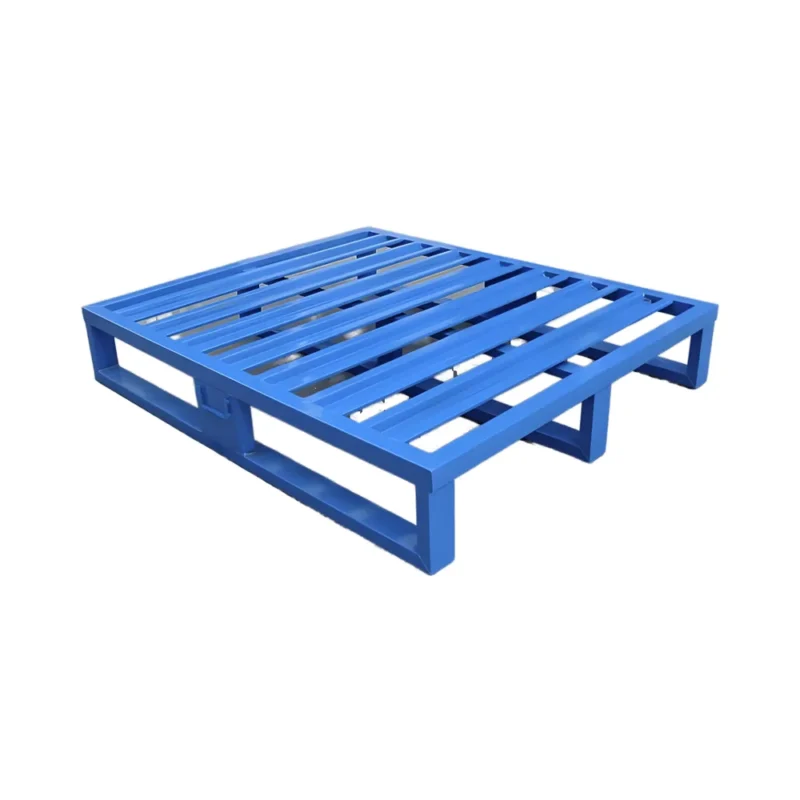
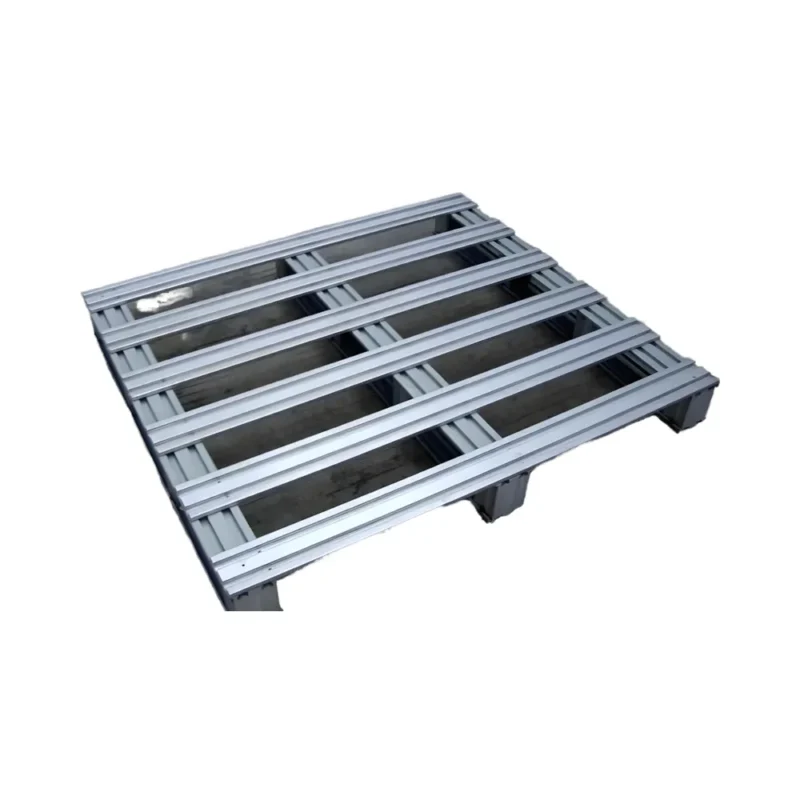
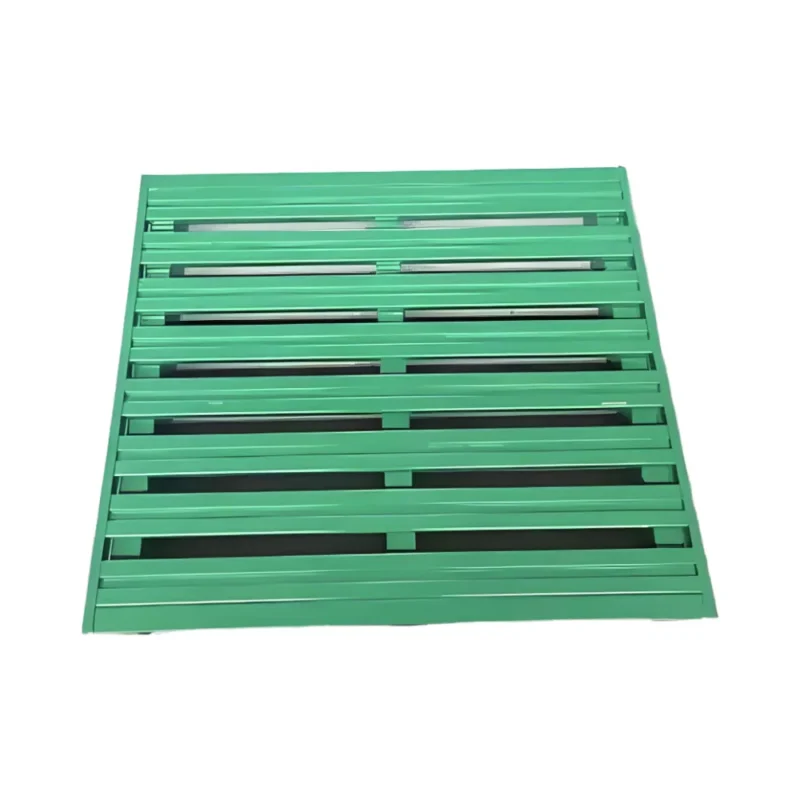
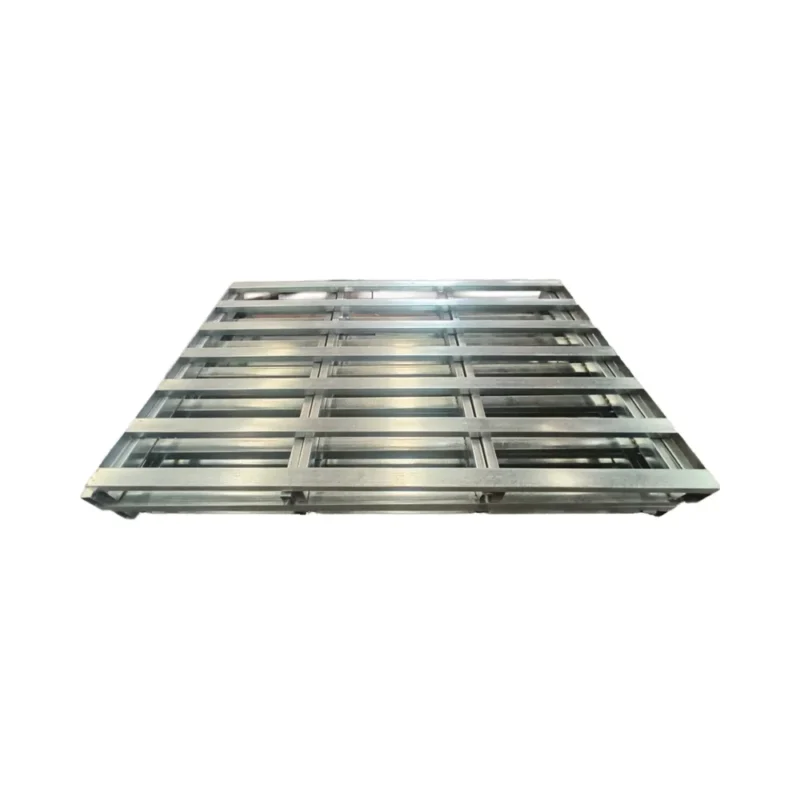
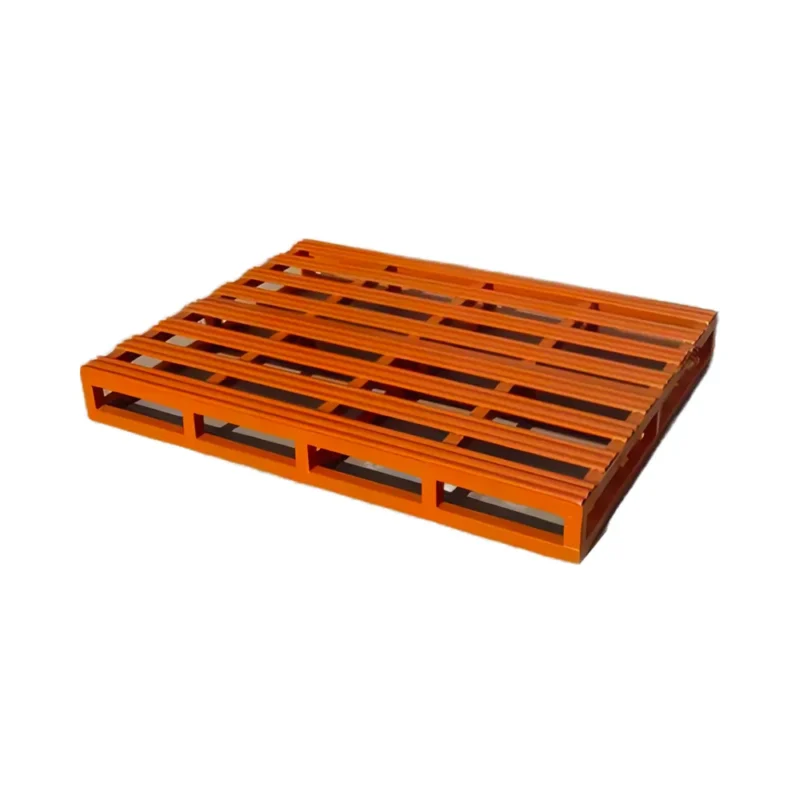
The key to steel pallet selection lies in the deck structure and entry style.
| Item | Specification / Description | Notes |
|---|---|---|
| Product Name | Steel pallet / metal pallet / iron pallet | Steel Pallet / Metal Pallet |
| Standard Size | 1200×800 mm (Euro standard) / 1200×1000 mm (general) / 1100×1100 mm (chemical industry) | Non-standard customization supported |
| Deck Structure | Flat deck / patterned deck / mesh deck (open type) | Mesh type is breathable, drainable, and lightweight |
| Entry Direction | 2-way entry / 4-way entry | 4-way is more flexible but structurally more complex |
| Dynamic Load per Pallet | 1000 kg to 3000 kg (standard) / 3000 kg to 5000 kg (heavy-duty) | Allowable load when lifted by forklift |
| Static Load per Pallet | 3000 kg to 8000 kg (standard) / 10000 kg+ (special) | Allowable load at the bottom layer during stacking |
| Rack Load Capacity | 800 kg to 1500 kg (special reinforcement required) | Must be clearly specified when used on racking |
| Deck Thickness | 1.5 mm / 2.0 mm / 3.0 mm (depends on load) | Common lentil-pattern plate for anti-slip performance |
| Leg / Base Type | Single-side three-runner base / double-side flat base / double-side I-beam base | Three-runner base is compatible with most automated equipment |
| Surface Treatment | Hot-dip galvanizing (HDG) / electro-galvanizing / electrostatic powder coating | Hot-dip galvanizing is preferred for export and cold storage |
| Standards | ISO 6780 / GB/T 10486 / EPAL-certified compatible | Meets international logistics standards |
Steel pallets may look simple, but the welding quality and surface treatment determine whether they can withstand heavy loads without deformation and resist rust in humid conditions.
Patterned deck: Lentil-pattern steel plate is used to increase friction and prevent goods from sliding during transport.
Reinforcing rib layout: Longitudinal and transverse reinforcing ribs are densely arranged under the deck to distribute the load evenly to the legs and prevent deck collapse.
Three-runner base structure: Three strong runners form a “three” shape, compatible with pallet jacks and the guide rails of automated storage and retrieval systems (AS/RS).
Rounded edges: The fork entry edges are rounded to prevent operators from being scratched or package surfaces from being damaged during forklift handling.
Full welding process: The joints between the legs and the deck use continuous fillet welding rather than spot welding to ensure impact resistance.
Smooth grinding: Weld seams are ground smooth to prevent snagging on conveyors or scratching the floor during use.
Extreme durability: Under normal use, the service life can reach 10 years or more, which is 5 to 10 times longer than wooden pallets, resulting in lower amortized costs.
Environmentally friendly: 100% recyclable, with no tree cutting and no disposal fees for waste materials.
Safe and reliable: Non-flammable, does not support combustion, and has no exposed nails, protecting both goods and workers.
Hygienic and compliant: No mold or insect eggs, easy to wash and disinfect, and compliant with FDA / HACCP food and pharmaceutical standards.
Food and pharmaceuticals: Sterile, moisture-resistant, and easy to clean, meeting strict hygiene audit requirements.
Export trade: No fumigation required, in line with ISPM 15 standards, enabling faster customs clearance and lower quarantine risk.
Automated storage and retrieval systems (AS/RS): Standard dimensions and high rigidity make them suitable for high-speed access by stacker cranes.
Chemicals and metals: Corrosion-resistant and heavy-duty, suitable for harsh industrial environments.
A steel pallet is a heavy-duty storage and transportation platform manufactured from high-strength steel.
It is designed to support goods during warehousing, material handling, transportation, and automated storage operations while providing excellent durability and structural stability.
Steel pallets offer high load capacity, long-term durability, corrosion resistance, fire resistance, and reduced maintenance requirements.
They are particularly suitable for demanding industrial environments where wooden pallets may become damaged or deteriorate over time.
Steel pallets are widely used in manufacturing plants, logistics centers, pharmaceutical warehouses, food processing facilities, automotive industries, cold storage warehouses, and export-oriented businesses.
Their durability makes them ideal for repetitive handling operations.
Yes. Steel pallets are compatible with most warehouse racking systems including selective pallet racking, drive-in racking, push back racking, shuttle racking, and AS/RS automated warehouses.
Their structural strength makes them suitable for high-bay storage applications.
Load capacity varies according to pallet dimensions, steel grade, structural reinforcement, and intended use.
Industrial steel pallets can be engineered to support a wide range of static, dynamic, and racking loads.
Yes. Steel pallets can be customized for specific dimensions, load requirements, entry configurations, surface finishes, and warehouse systems.
Customized designs ensure compatibility with operational workflows and storage equipment.
Yes. Steel pallets do not require ISPM-15 fumigation treatment and comply with international shipping regulations.
This simplifies export logistics and reduces compliance costs.
Yes. Steel pallets maintain their strength and performance in low-temperature environments.
They are commonly used in refrigerated warehouses and freezer storage facilities.
Common surface treatments include powder coating, galvanized finishes, and industrial paint coatings.
These treatments enhance corrosion resistance and extend service life in challenging environments.
Steel pallets offer significantly greater durability, higher load-bearing capacity, and longer operational life than wooden pallets.
They are also resistant to moisture, insects, mold, and fire-related risks.
A properly manufactured steel pallet can remain in service for more than 15 years.
Routine inspections and proper handling practices help maximize lifespan and operational performance.
Pricing depends on pallet dimensions, load requirements, steel specifications, surface treatment options, and production volume.
Most projects require customized quotations based on operational and storage requirements.