Phone:
(86)138-1388-1779
Physical address:
6296 Donnelly Plaza
Ratkeville, Bahamas.

Phone:
(86)138-1388-1779
Physical address:
6296 Donnelly Plaza
Ratkeville, Bahamas.
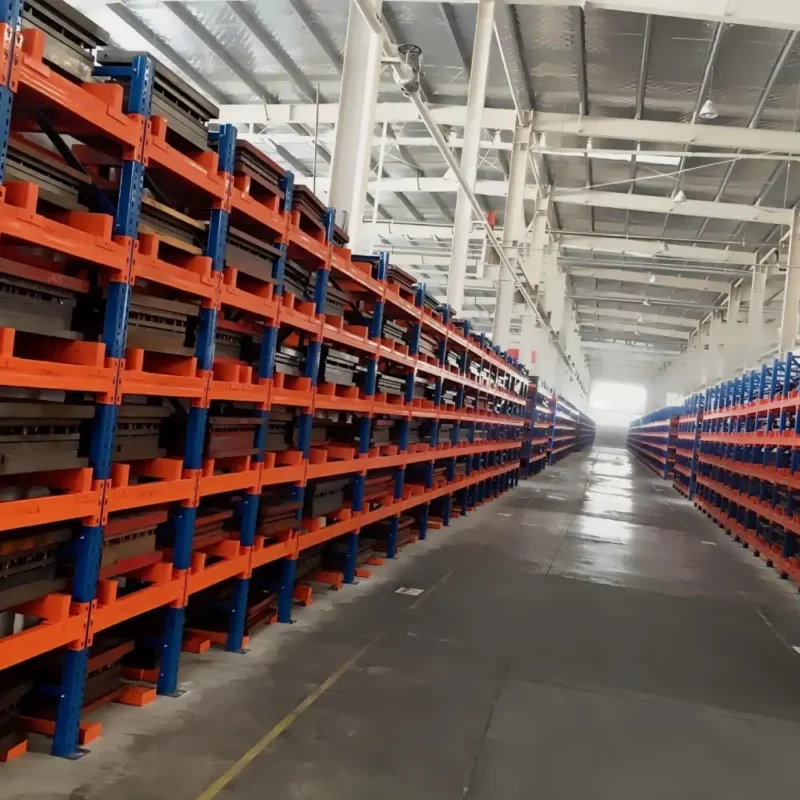
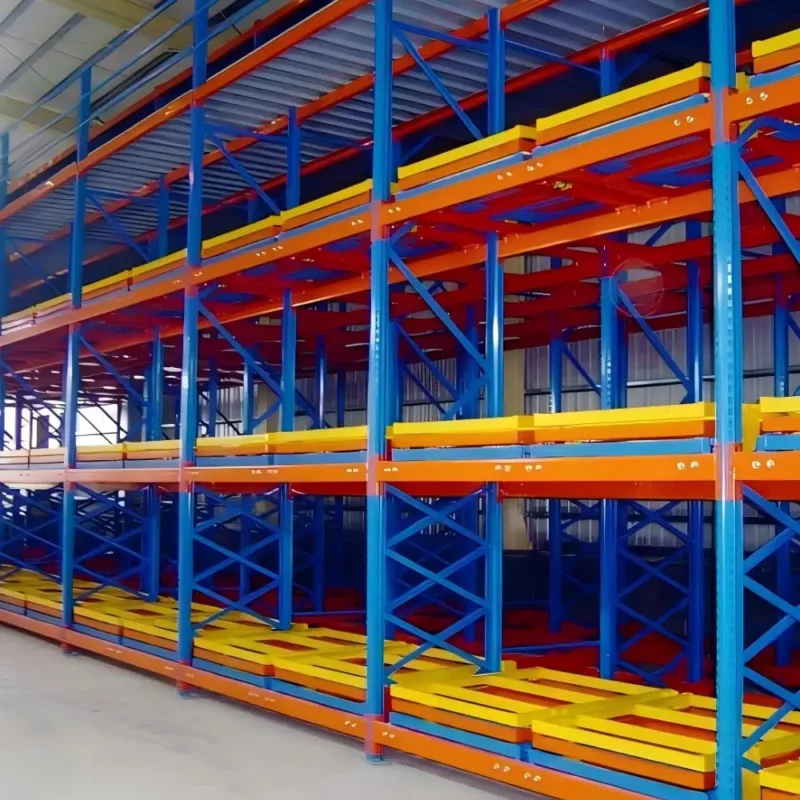
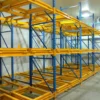
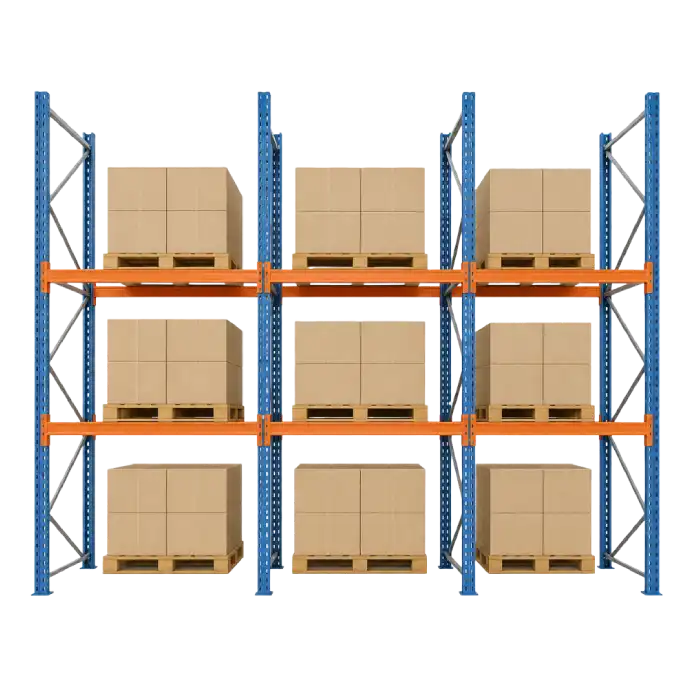
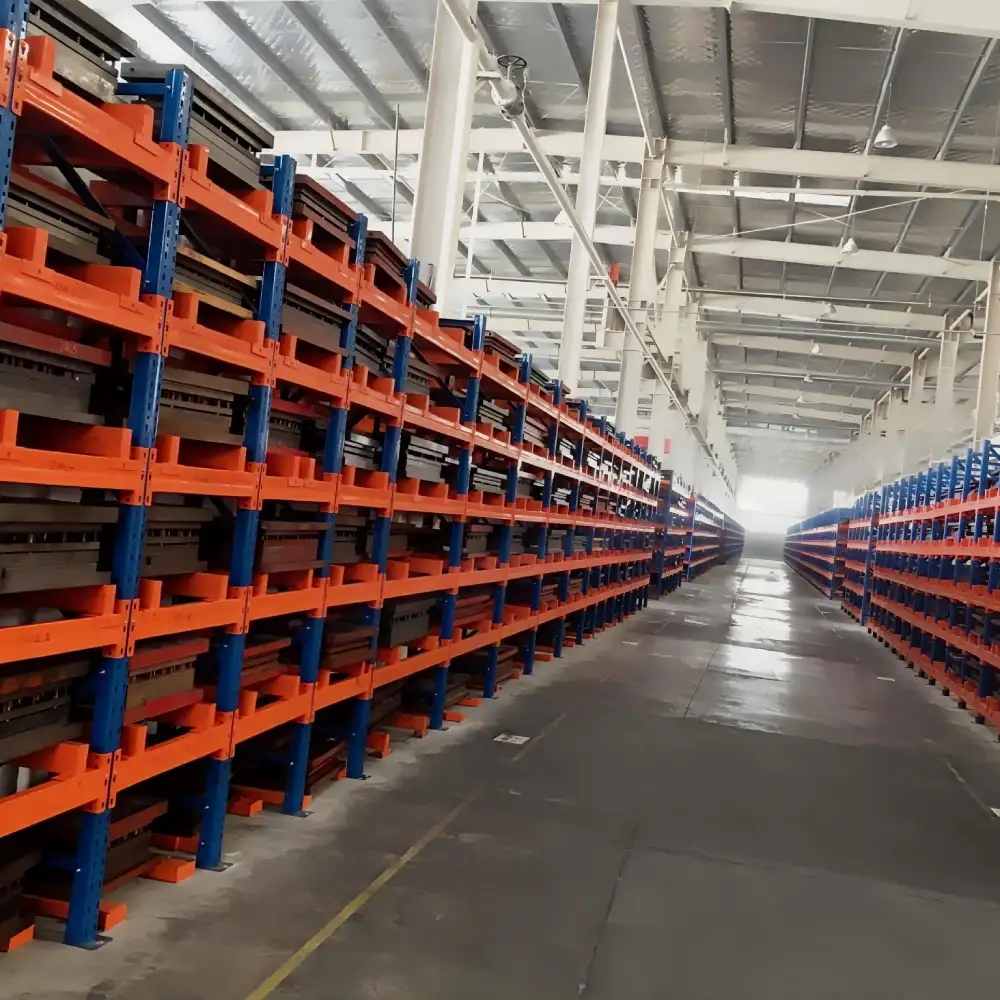
Push-back racking evolved from heavy-duty pallet racking.
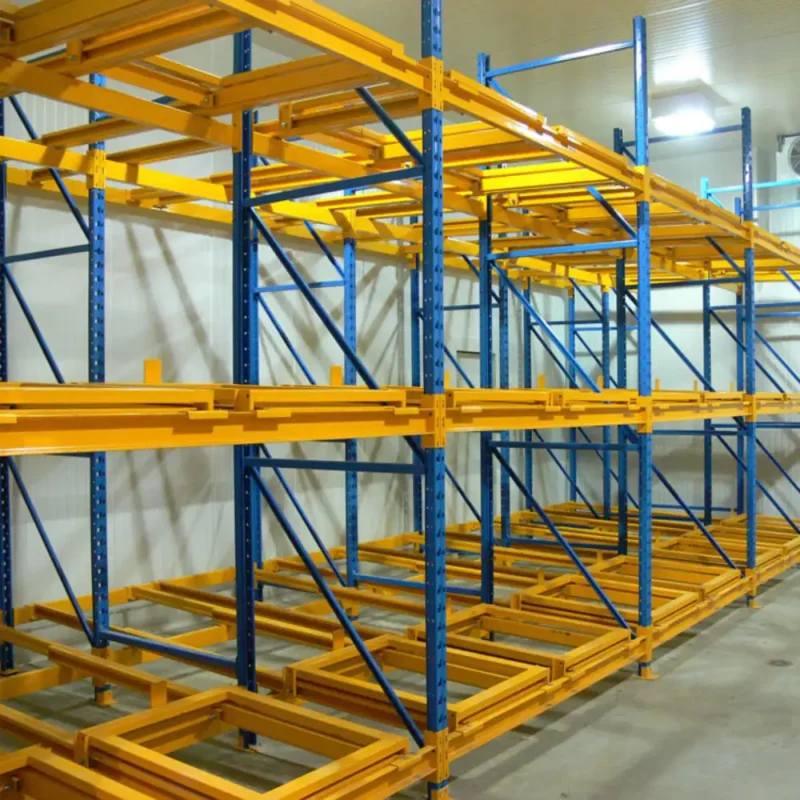
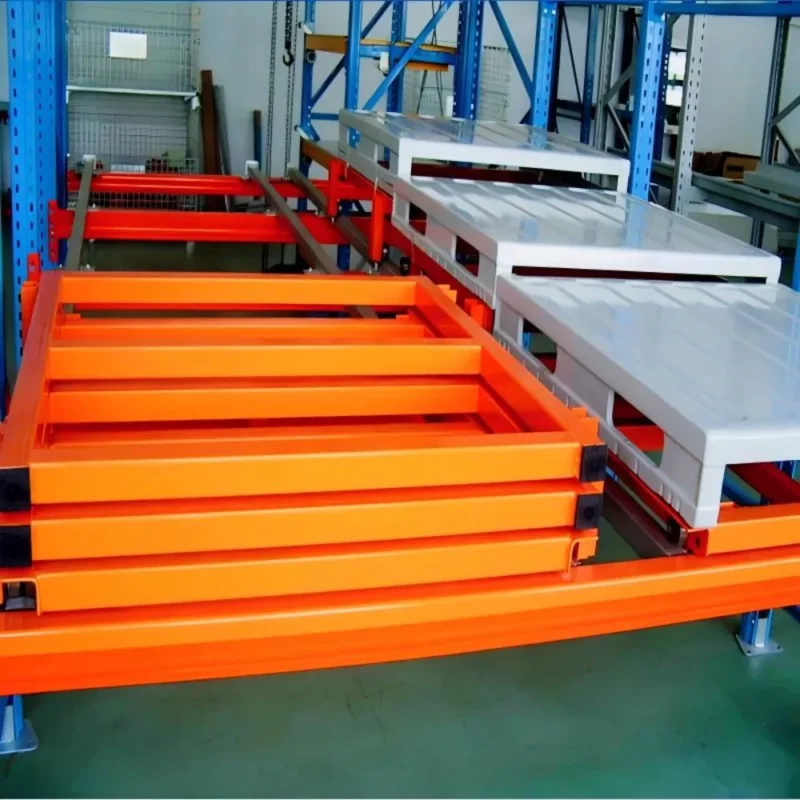
It utilizes a combination of rails and pallet trolleys.
The rails are sloped (around 3°), allowing for first-in, last-out (LIFO) loading and unloading of palletized goods using their own weight.
It is suitable for storing large quantities of a few varieties of goods, offering high space utilization and flexible, convenient access.
The total depth of the racking should not be too deep, generally within five pallet depths.
The weight of a single pallet is generally within 1500 kg.
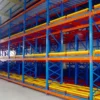
Push back pallet racking is a high-density storage system that uses nested carts and inclined rails to store multiple pallets deep in one lane. Forklifts operate only from the front aisle, making it a practical LIFO pallet storage solution for warehouses that need strong density without entering the rack structure.
Push-back pallet racking works by pushing the existing pallets deeper into the lane as new pallets are loaded from the front. When the front pallet is removed, the next pallet automatically rolls forward into position. This makes the system simple to operate, efficient to pick from, and highly effective for batch storage.
It is a strong choice for businesses that want more density than selective racking but better accessibility than drive-in racking.
| > 3 pallets Deep | High Density | LIFO Flow | Safer Operation |
| Stores up to five pallets deep in one lane. | Excellent space utilization with fewer aisles. | Ideal for bulk inventory rotation. | Forklift stays in the front aisle only. |
| Item | Specification / Description | Notes |
|---|---|---|
| Rack Type | Push-Back / Pushback Racking | > 3 pallets Deep |
| Storage Mode | LIFO (Last In, First Out) | Best for bulk goods and stable SKUs |
| Load per Pallet | 500 kg to 1500 kg | Higher loads require reinforced rails |
| Rack Depth | > 3 pallets Deep | Usually uses 3-section or 4-section rails |
| Rack Height | Typically 3 to 5 levels | Depends on product height and clear warehouse height |
| Core Components | Nested rails / pallet carts | Smooth sliding performance is critical |
| Upright Profile | Heavy-duty 90×70 mm, 100×95 mm | Designed to resist push-in side forces |
| Surface Finish | Powder coating / hot-dip galvanizing | Hot-dip galvanizing recommended for cold storage |
| Safety Accessories | Entry collision posts, pallet stop blocks, end buffers | Prevents over-push and pallet drop |
| Nested Rail System | The nested rail system uses 3-section or 4-section heavy-duty slide rails to allow pallets to move smoothly through a 5-deep lane. |
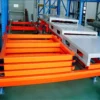
| Pallet Cart / Carrier | Each pallet sits on an independent cart with anti-derail features, positioning pins, and stable wheel movement during loading and retrieval. |
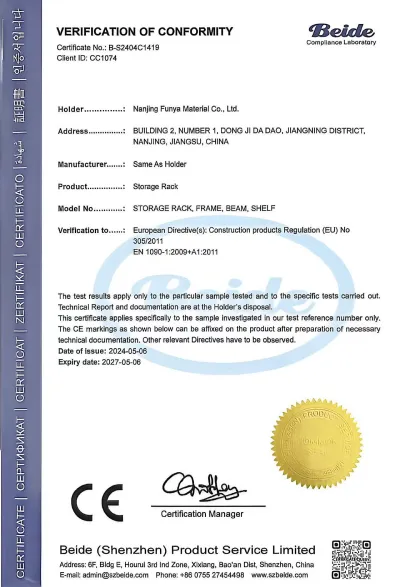
| Frame & Impact Protection | Reinforced uprights and impact protection components improve rack strength and reduce damage during repeated forklift loading. |
| End Stop Control | Adjustable stop bolts at the rear of the lane limit excessive cart travel and help keep the system operating safely. |
Typical Applications
5 Deep Push Back Racking is a high-density pallet storage solution designed to maximize warehouse space utilization while maintaining efficient pallet access. It is widely used in manufacturing facilities, distribution centers, cold storage warehouses, and logistics operations. This FAQ section answers common questions about push back racking design, storage density, load capacity, LIFO inventory management, warehouse applications, customization options, and project costs.
5 deep push back racking is a high-density warehouse storage system that stores up to five pallets deep within a single storage lane. The system uses a series of nested carts and inclined rails that allow pallets to move automatically as inventory is loaded and unloaded.
This storage method significantly increases pallet positions while reducing aisle requirements, making it an ideal solution for warehouses with limited floor space.
Push back racking operates using gravity-assisted carts mounted on inclined rails. When a pallet is loaded, it pushes the previous pallet backward along the rail system.
As pallets are removed from the front position, the remaining pallets automatically move forward, providing efficient pallet handling and improved warehouse productivity.
5 deep push back racking increases storage density, improves warehouse utilization, reduces aisle space requirements, and allows multiple pallets to be stored within a single lane.
The system also reduces forklift travel time and improves operational efficiency compared to conventional pallet racking systems.
Push back racking operates using a Last In First Out (LIFO) inventory management system.
This storage method is particularly suitable for products with stable turnover rates, non-perishable inventory, and bulk storage applications.
Push back pallet racking is commonly used in food and beverage storage, manufacturing facilities, logistics centers, cold storage warehouses, retail distribution centers, and third-party logistics operations.
These industries benefit from improved storage density and efficient pallet handling.
Yes. Push back racking systems can be customized according to warehouse dimensions, pallet specifications, storage depth requirements, load capacities, and operational objectives.
Customized engineering ensures maximum storage efficiency and safe operation.
Load capacity depends on pallet dimensions, rack design, cart construction, and engineering specifications.
Industrial push back racking systems can be designed to accommodate a wide range of pallet weights while maintaining safe operation.
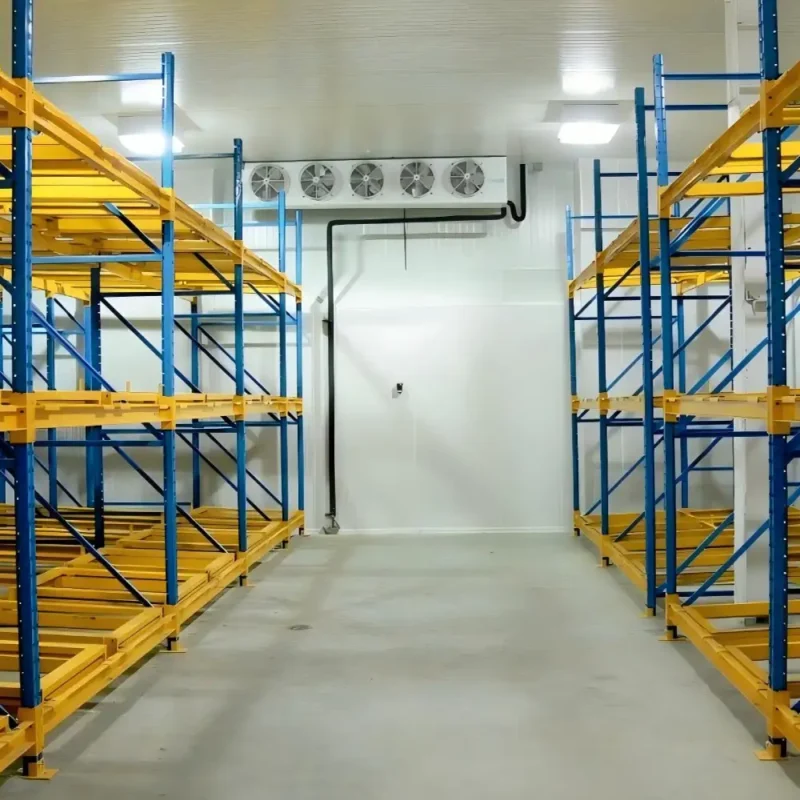
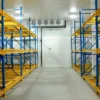
Yes. Push back racking is widely used in cold storage and freezer warehouses because it maximizes storage density and reduces refrigerated space requirements.
The system can be manufactured with finishes suitable for low-temperature environments.
Push back racking uses gravity-assisted carts and rails to move pallets, while drive-in racking requires forklifts to enter storage lanes for loading and unloading.
Push back systems typically provide faster pallet access and reduced forklift operating time.
Most standard counterbalance forklifts and reach trucks are compatible with push back racking systems.
Forklift selection depends on warehouse layout, rack height, pallet dimensions, and operational requirements.
High-quality push back racking systems can last more than 15 years when properly maintained and inspected.
Routine inspections and preventive maintenance help ensure long-term structural integrity and operational reliability.
The cost depends on rack height, storage depth, load capacity, cart specifications, warehouse layout, and project complexity.
Most projects require customized engineering and quotations based on specific warehouse storage objectives.