Telepon:
(86)138-1388-1779
Alamat fisik:
6296 Donnelly Plaza
Ratkeville, Bahama.

Telepon:
(86)138-1388-1779
Alamat fisik:
6296 Donnelly Plaza
Ratkeville, Bahama.
Up to 75 percent more pallet positions in the same footprint compared with selective racking
LIFO single entry lanes and FIFO drive through lanes, matched to rotation needs
Continuous rails carry pallets with fewer steel parts, lowering cost per stored pallet
Key benefits:
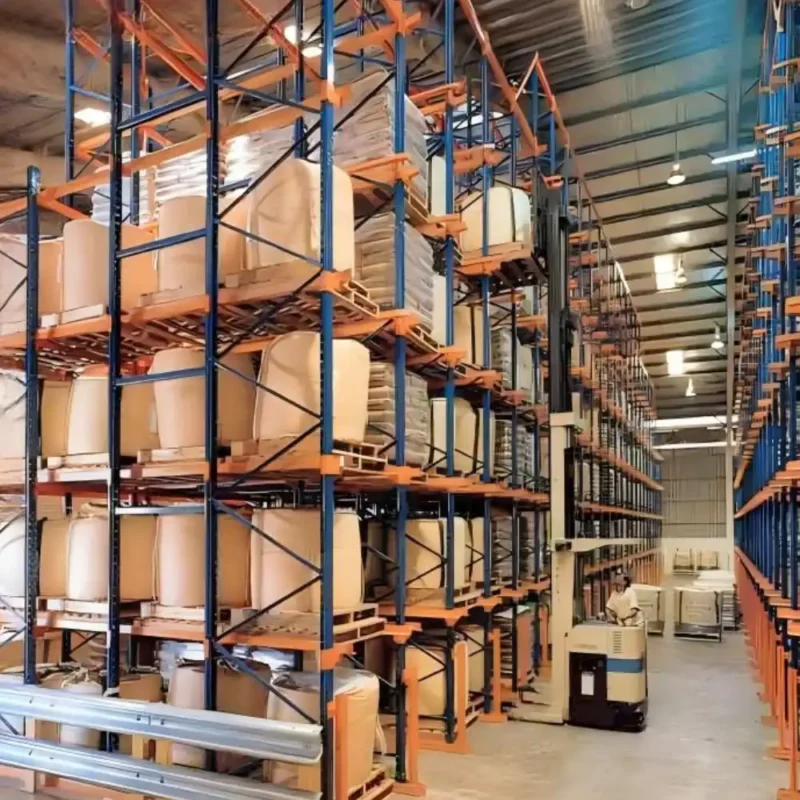
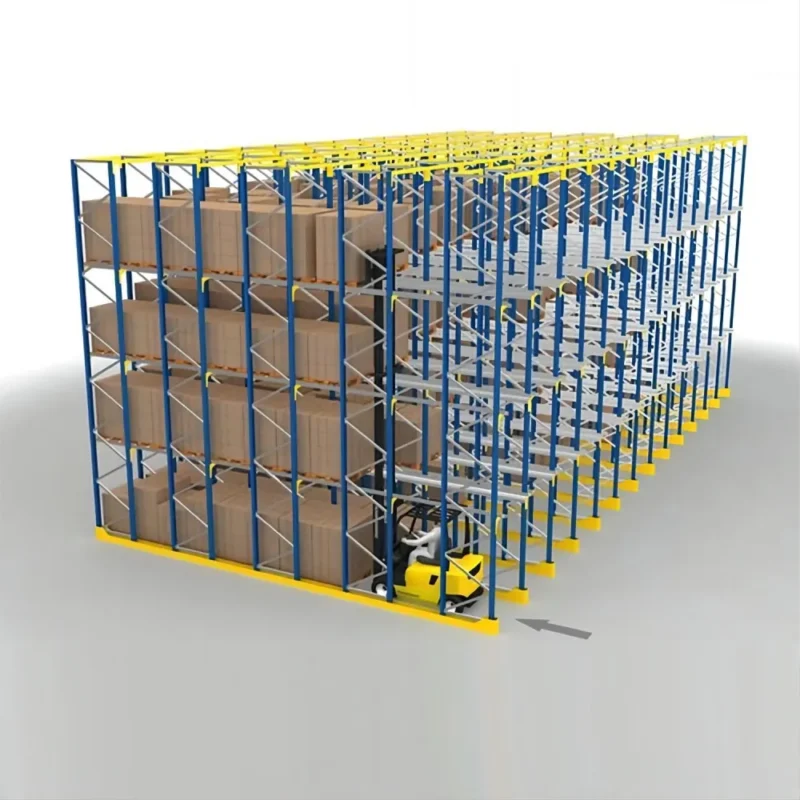
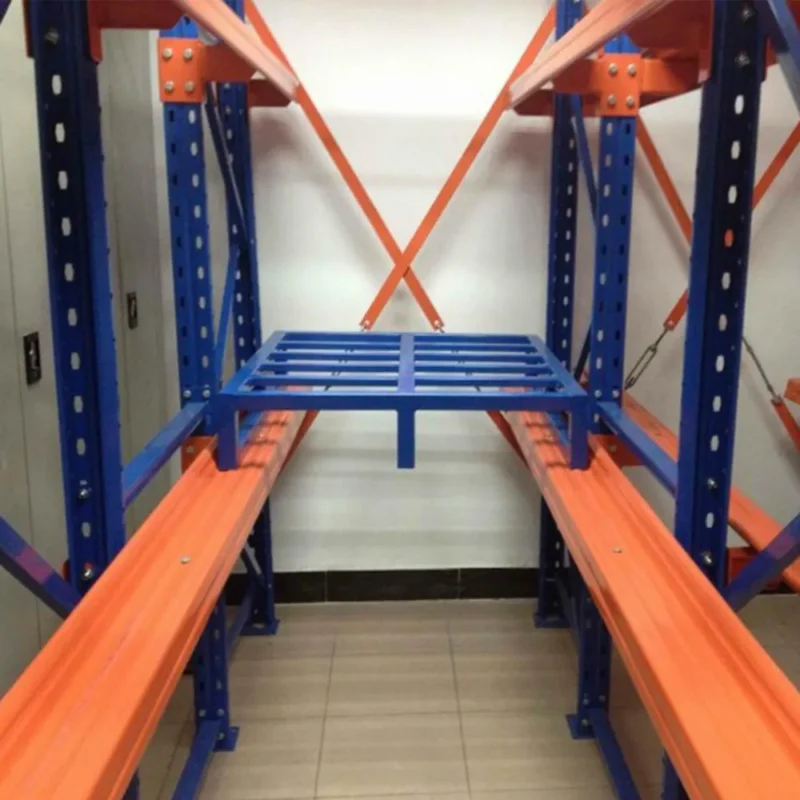
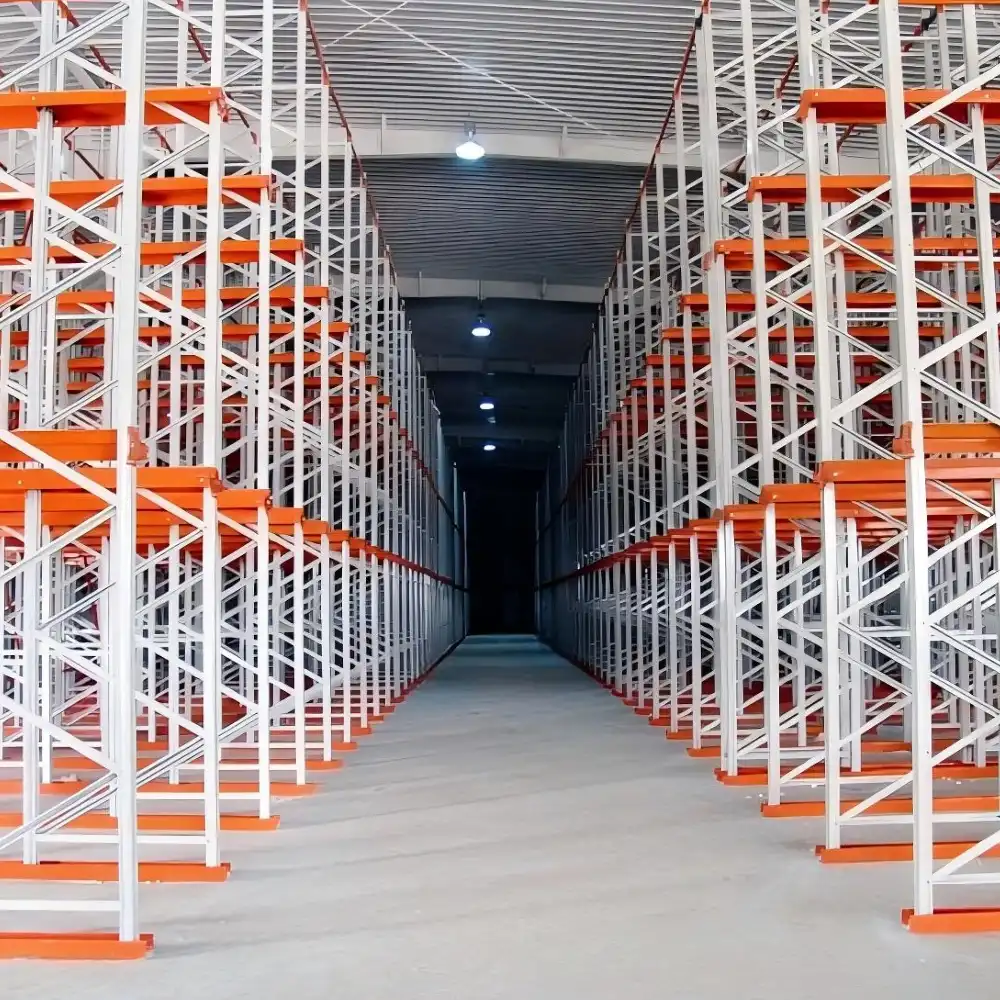
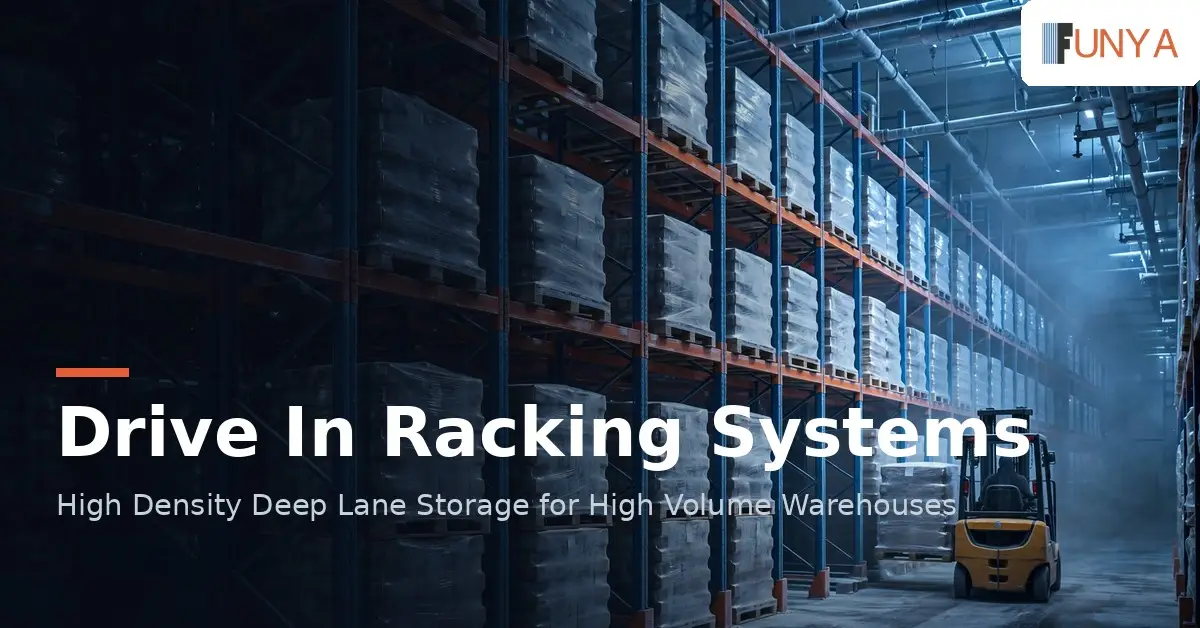
Drive in racking is a pallet storage system in which forklifts drive between the uprights and set pallets on rails running the depth of the lane. A single entry bay stores pallets last in, first out. A drive through bay opens at both ends for first in, first out rotation: pallets load from one side and pull from the other.
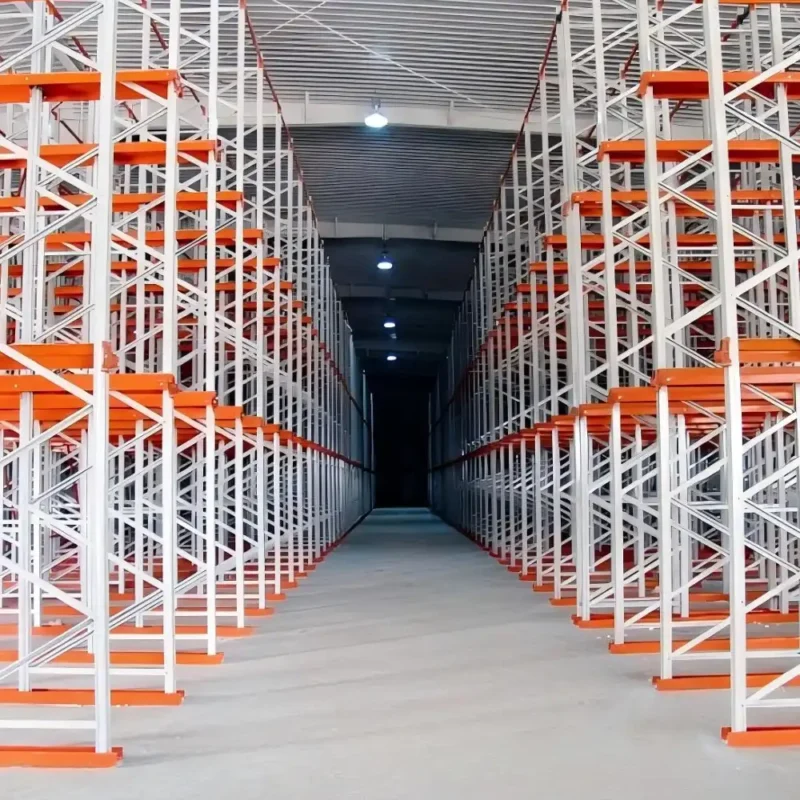
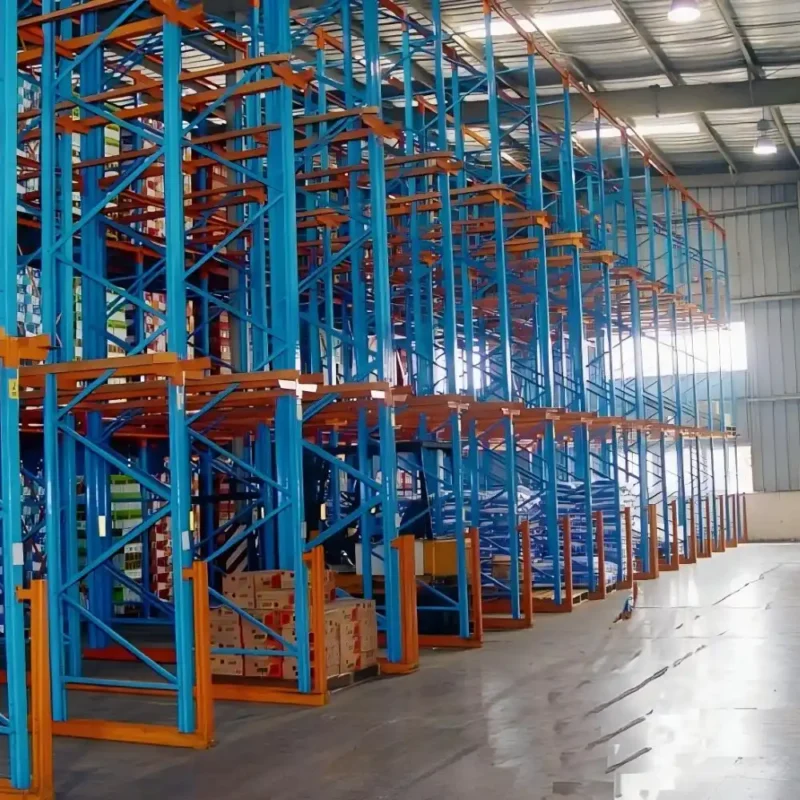
Upright frames anchor to the floor slab, continuous rails run along both sides of each lane at every level, and bracing ties the frames into one stable block. Because the forklift works inside the rack, uprights run heavier than selective frames and every base is anchored.
In a drive in bay, the driver sets each pallet at the deepest open position and backs out, so the front pallet is always picked first: last in, first out. In a drive through bay, pallets enter from the loading aisle and exit from the pick aisle, which enforces first in, first out without relying on operator discipline.
The tradeoff is direct. Drive in racking turns aisles into storage for up to 75 percent more positions than selective racking in the same footprint, but reaching a deep pallet means first pulling every pallet in front of it. Each lane therefore holds a single SKU, which is why the system fits bulk storage rather than mixed picking. For buyers comparing pallet racking systems, this is the densest static option when floor space is the binding constraint.
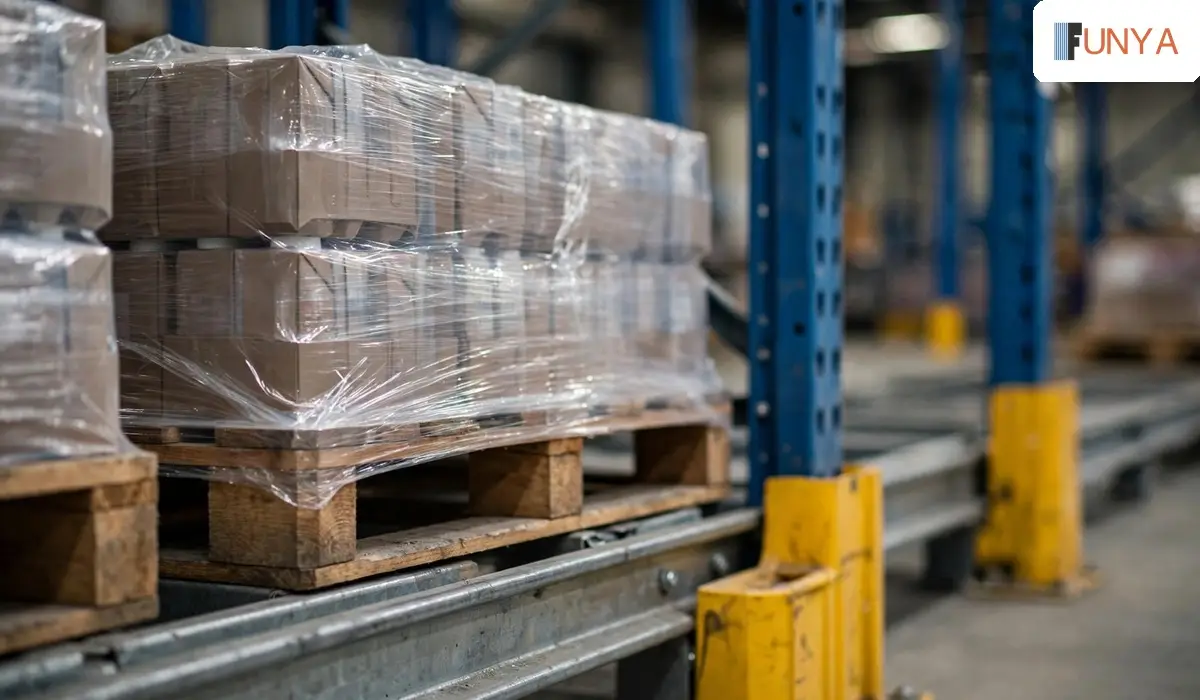
Upright frames are built from cold rolled steel posts joined by horizontal and diagonal bracing, sized heavier than selective frames because forklifts operate between them. Row spacers tie back to back rows together so the block acts as one structure.
Rails run the full depth of each lane at every storage level and carry the pallet by its bottom boards. Rail gauge matches the pallet width plus operating clearance, which is why consistent pallet dimensions matter so much here. Rails are the wearing part of the system, so rail thickness and connection strength are engineered for the traffic each lane will see.
Every upright anchors to the concrete slab with expansion bolts through steel baseplates. Anchoring is not optional in drive in racking: the forklift enters the structure itself, and an unanchored frame struck at lane entry can shift the whole row out of plumb.
Entry guides at the mouth of each lane help drivers center the truck before driving in, which cuts the most common impact point in the system. Upright protectors shield the posts where forklifts turn into the lane, and in high traffic operations they pay for themselves by keeping lanes in service.
Refrigerated cubic footage is the most expensive space in distribution because conditioning cost scales with volume. Drive in racking cuts that volume substantially for a given pallet count, which is why it is the default system in cold storage facilities worldwide. Freezer projects get hot dip galvanized finishes and low temperature steel grades.
Beverage plants and food distributors run high volume on a limited SKU range, exactly the profile drive in lanes are built for. Ambient staging and bulk buffer stock sit in drive in lanes, while date sensitive product that needs guaranteed rotation goes into drive through lanes or pallet flow.
Manufacturers stage bulk inputs near production lines without spreading them across selective aisles. Resins, packaging materials, components, and work in progress move in full pallet quantities, so deep LIFO lanes match the way the material is actually consumed.
Third party logistics providers use drive in lanes for clients with large single SKU volumes. Bulk commodity operations store building products, paper, and agricultural inputs the same way. Wherever a few SKUs dominate the pallet count, density beats selectivity.
| Barang | Spesifikasi | railsNotes |
| System type | Drive in / drive through lane racking | Static high density system |
| Storage method | Pallets on continuous rails | No individual beams per level |
| Rotation | LIFO (drive in); FIFO (drive through) | Set by bay access |
| Kedalaman jalur | 4 to 10 pallets typical | Project specific |
| Pallet levels | 3 to 6 typical | Limited by forklift lift height at depth |
| Load capacity | Project specific | Engineered per pallet weight and design standard; site lists 500 to 2,500 kg per position as a planning range |
| Material | Cold rolled steel | Mill certified |
| Steel grade | Q235B | Q355D for low temperature projects; confirm threshold |
| Profil tegak | Project specific | Selected by load and height in engineering review |
| Finish | Electrostatic powder coating | Hot dip galvanizing optional for cold or wet areas |
| Standard colors | Blue uprights, orange beams | Custom RAL colors on request |
| Rail type | Continuous side rails | Sized to pallet width plus clearance |
| Pallet compatibility | Solid stringer pallets standard | Block pallets need rail review before ordering |
| Persyaratan lorong | One aisle (drive in); two aisles (drive through) | Drive through needs load and pick aisles |
| Frame height | Up to 12,000 mm typical | Project specific |
| Design standards | EN 15512:2020 / GB/T 39830 series | Applied where the project specifies them |
| Safety components | Entry guides, upright protectors, anchors, row spacers | Included per project scope |
Note: load capacity is never a catalog number. It is calculated for each project from pallet weight, lane depth, level height, and the design standard in force.
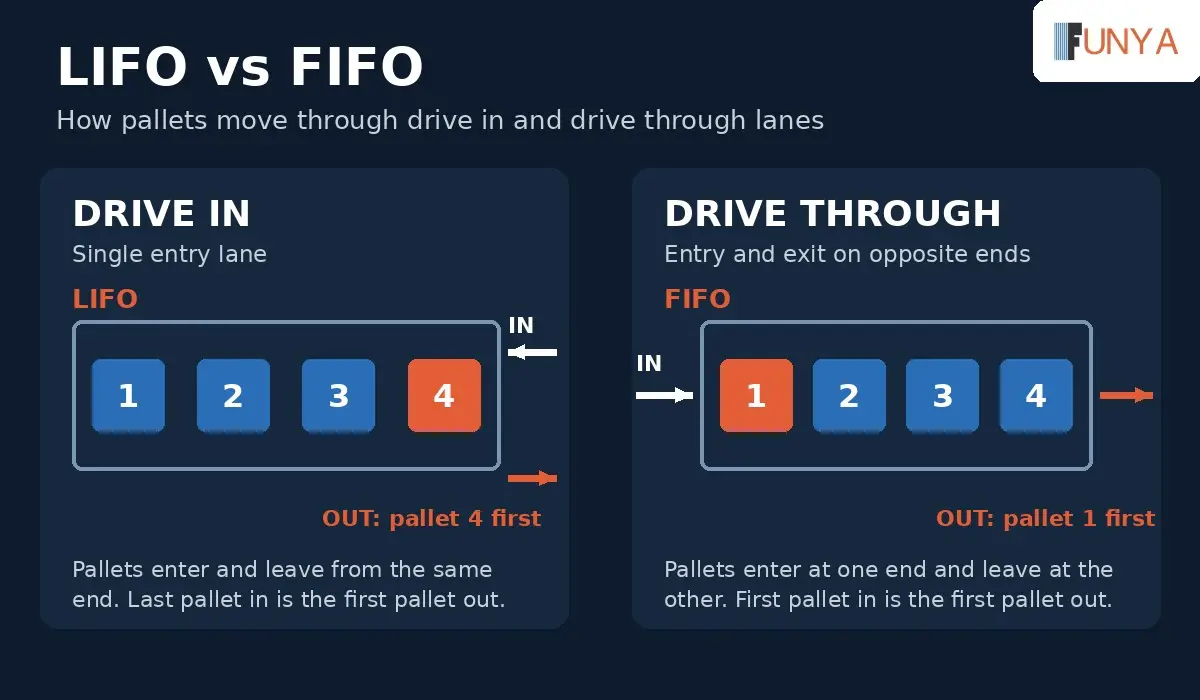
Bays sit against a wall or back to back, and forklifts enter and back out through the same aisle. Densest layout, since every position except the aisle stores pallets. Choose it when rotation order does not matter and the SKU count per bay stays low.
Both ends of the bay stay open. Forklifts load from the rear aisle and pull from the front aisle, which enforces first in, first out rotation. It needs an aisle at both ends, so it stores slightly fewer pallets. Choose it for date sensitive or lot tracked product.
Each lane position holds two pallets side by side, doubling positions per lane for very high volume on very few SKUs: Double Wide Drive In Pallet Racking.
Roll formed steel suits most ambient and refrigerated applications at the best cost per position. Structural frames use hot rolled sections for higher impact resistance and heavier pallets, the right call for freezers and constant forklift traffic inside the lanes.
Lanes typically run 4 to 10 pallets deep with 3 to 6 levels. Depth is set per SKU from turnover rate, batch sizes, and forklift data. Powder coating is the standard finish; freezer projects get hot dip galvanizing and low temperature steel: Drive In Racking for Cold Storage.
Drive in racking is not the best fit when SKU count is high, when every pallet needs direct access, or when pallets vary in size and quality. Date sensitive stock that needs FIFO belongs in drive through or pallet flow lanes instead. If selectivity matters more than density, adjustable selective racking is the better choice.
| Drive In | Drive Through | Selektif | Menekan | Pallet Flow | |
| Rotation | LIFO | FIFO | Full selectivity, FIFO by location | LIFO | FIFO |
| Aisles needed | One | Two | One per row pair | One | Two |
| Forklift enters the rack | Yes | Yes | No | No | No |
| Typical lane depth | 4 to 10 pallets | 4 to 10 pallets | 1 pallet | 2 to 5 pallets | 4 to 12 pallets |
| Selektivitas | Rendah | Rendah | 100 percent | Sedang | Sedang |
| Terbaik untuk | Few SKUs, high volume, no rotation need | Few SKUs, FIFO required | Many SKUs, direct access | Medium depth, forklift stays out | Date sensitive, high throughput |
Drive in racking only works as well as the pallets running through it. Pallets rest on the rails by their bottom boards, so broken stringers or non standard sizes cause hang ups and jammed lanes. Standardize the pallet pool before installing drive in lanes, or choose a beam based system that forgives pallet variation.
These lanes take more abuse than any other racking type because the forklift works inside the structure with inches of clearance. That is why uprights run heavier, every base is anchored, and entry guides and column protectors are standard recommendations. Budget for periodic rack inspections: catching a bent upright early keeps a lane in service.
Tall drive in frames concentrate significant weight on the baseplates, and in seismic zones the lateral forces on a fully loaded deep lane system need proper calculation. Share the seismic zone, floor slab specification, and maximum pallet weights with the engineering team so bracing and anchoring reflect the real loads.
FunYa Racking manufactures drive in racking in its own 15,000 square meter Nanjing facility instead of reselling it. Six workshops cover cold rolling, cutting, stamping, welding, coating, and finished goods storage, and quality management follows ISO9001.
Every project starts with a layout review. The engineering team takes your warehouse dimensions, pallet sizes, load weights, SKU profiles, and forklift data, then returns 2D/3D CAD drawings with a quotation. Load calculations follow the design standard your project requires. Export packing, shipping documents, and installation guidance are part of the delivery, and spare parts stay available after handover.
To start, contact our team with your project details and get a drive in layout drawn for your actual building.
Choose selective racking when the SKU count is high and pickers need direct access to every pallet without moving others. Choose drive in racking when a few SKUs move at high volume and floor space is the binding constraint. Drive in stores up to 75 percent more pallets in the same footprint, but reaching a deep pallet means first pulling every pallet in front of it.
Drive in racking opens at one end only. Forklifts load and pull from the same aisle, which forces last in, first out rotation. Drive through racking opens at both ends. Forklifts load from the rear aisle and pull from the front aisle, which gives first in, first out rotation. Drive through needs an aisle at both ends, so it stores slightly fewer pallets than single entry drive in.
Typical lanes run 4 to 10 pallets deep. Deeper lanes raise density but increase forklift travel time inside the rack and the chance of upright contact. The right depth is set per SKU from turnover rate, batch size, and forklift specifications. Lanes deeper than 10 pallets need review, since half empty lanes can erase the density gain.
Yes. It is the default system for cold storage because density cuts the refrigerated volume that must be conditioned, which lowers energy cost every day the facility runs. Freezer projects use hot dip galvanized finishes and low temperature steel grades. Share the operating temperature range with the engineering team so the material and finish are specified for it.
An accurate quotation needs real project inputs. Share the following:
Send these details on WhatsApp or by email and get a customized drive in racking layout drawn for your building.